
Table of Contents
- What You Need to Know About Dental Bridge Downsides
- How Dental Bridges Work and Why Adjacent Teeth Matter
- Exploring the Potential Drawbacks of Dental Bridges
- Managing and Maintaining Your Dental Bridge for Long-Term Health
- Long-Term Oral Health Considerations for Bridge Wearers
- Your Dental Bridge Questions Answered
- Partner with The Grove Dentistry for Your Restorative Care
What You Need to Know About Dental Bridge Downsides
If you are wondering what the downside of a dental bridge is, the most significant concern is that this restoration requires modifying the healthy teeth on either side of the gap to act as supports, which can put those teeth at greater risk of decay and structural compromise over time. We believe it is important for anyone considering tooth replacement to understand that while a bridge effectively fills the space and restores chewing function, its design inherently affects the abutment teeth. The long-term oral health implications make it essential to weigh these factors carefully before proceeding.
Supporting teeth need to be ground down to allow for crowns that anchor the bridge in place, a permanent alteration that can weaken otherwise healthy tooth structure. A dental implant, by contrast, is anchored into the jawbone rather than attaching to neighboring teeth. Implants preserve bone density and leave adjacent teeth untouched. While there’s nothing particularly complicated about this comparison between bridges and dental implants, these differences play a key role in determining a restoration’s lifespan and overall look of your smile as more time goes on. The way a bridge attaches to the teeth on either side is key to understanding both its function and its potential drawbacks.
Key Takeaways
- When a lost tooth is replaced with a dental bridge, two healthy teeth on both sides of the empty space are reshaped to support the new artificial teeth.
- The way bridges anchor to neighbouring teeth introduces several potential downsides that anyone considering tooth replacement in Port Coquitlam should understand.
- Yet with proper maintenance, a bridge’s lifespan can be significantly extended despite any concerns.
- A huge disadvantage of a dental bridge lies in how it affects your other healthy tooth structure and the jawbone beneath them over the years.
- Wondering what the downside of a dental bridge is?
How Dental Bridges Work and Why Adjacent Teeth Matter
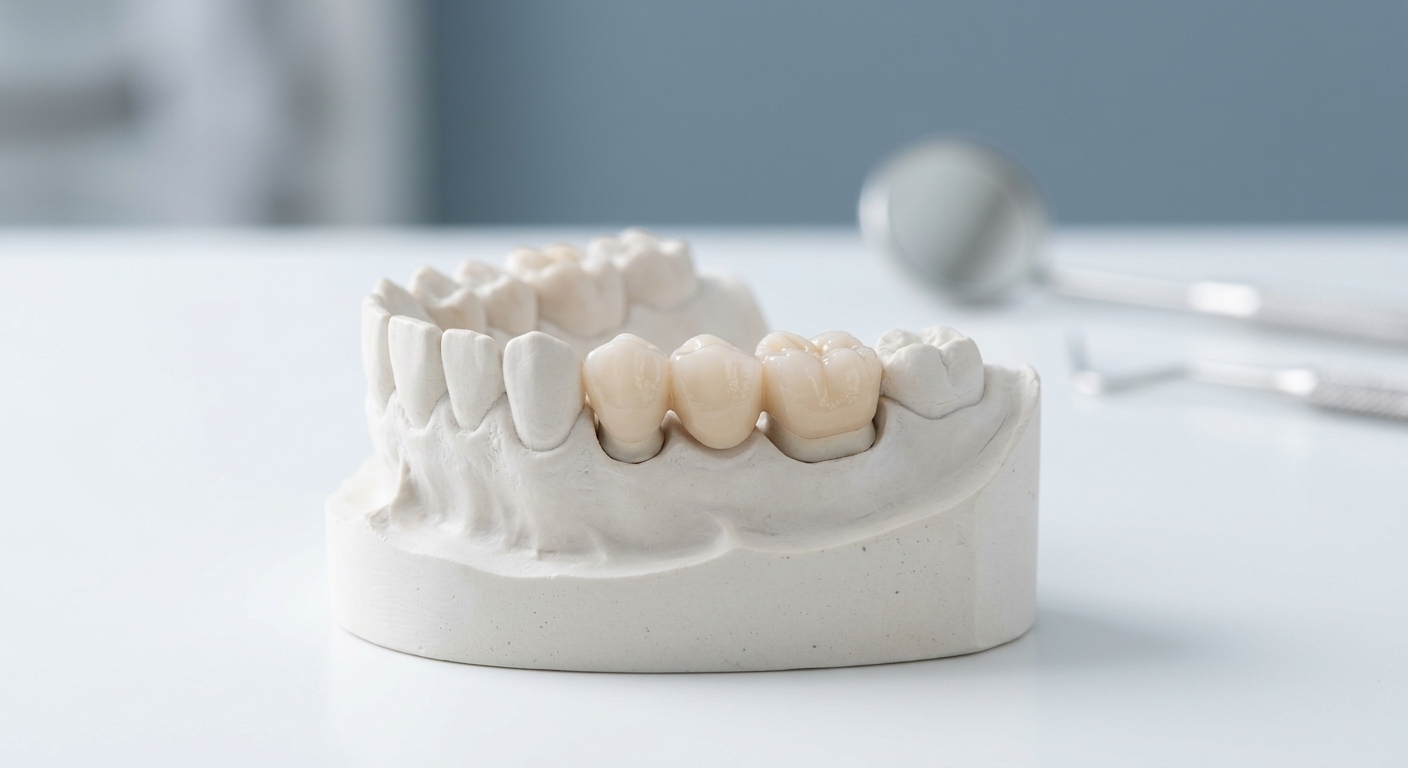
When a lost tooth is replaced with a dental bridge, two healthy teeth on both sides of the empty space are reshaped to support the new artificial teeth. First, the two nearest teeth, often referred to as abutment teeth, are prepared for the bridge work by reducing the enamel slightly from their surfaces. Next, each one is fitted with a custom-made crown, which will fit over its newly shaped surface to make room for the false tooth. This false tooth, also known as a pontic, is fused to the abutment crowns, and the restoration is cemented in place. The procedure typically requires two appointments. During the first appointment, the teeth are prepped and a temporary bridge is installed; during the second visit, the permanent replacement is bonded in place.
Because the bridge uses the neighboring teeth for all of its structural support, their long-term health is essential. For them to do their job properly, they need to be free from decay as well as having healthy gums around the tooth root. Despite making sure that your bridge is constructed well, the area where the crown meets the natural tooth may become prone to plaque, and the space underneath the false tooth will also be difficult to get to when using dental floss. Over time, these cleaning challenges can lead to decay at the abutment teeth or gum inflammation, both of which can undermine the bridge’s stability.
Here is a comparison between these two forms of restorations. A bridge is held up by the teeth around its missing spot while a dental implant consists of a titanium post that is put right in the jawbone. After some time this titanium gets fused together with the bones and this is referred to as osseointegration.
| Aspect | Dental Bridge | Dental Implant |
|---|---|---|
| Success Rate | Varies; supporting adjacent teeth can decay or fracture, impacting success. | Approximately 95% success rate over ten years. |
| Longevity | Typically 5–15 years depending on care and health of supporting teeth. | Can last decades with proper maintenance and good oral hygiene. |
| Impact on Adjacent Teeth | Requires grinding down the two neighboring teeth to serve as abutments, which may weaken them over time. | No alteration of adjacent teeth; stands independently. |
| Bone Health | Does not stimulate the jawbone beneath the missing tooth; bone loss may occur over time. | Osseointegration stimulates bone, helping preserve jawbone density. |
| Cleaning & Maintenance | Special flossing tools needed to clean under the pontic (false tooth); harder to keep plaque-free. | Cleaned similarly to natural teeth; easier access for hygiene. |
In other words, since a bridge requires the support of healthy abutment teeth, its strength depends largely on how well these supporting teeth are doing. So when we talk about the drawbacks of bridges versus implants in the following pages, remember that these drawbacks exist because a bridge requires these abutment teeth to be healthy.
Exploring the Potential Drawbacks of Dental Bridges
The way bridges anchor to neighbouring teeth introduces several potential downsides that anyone considering tooth replacement in Port Coquitlam should understand.
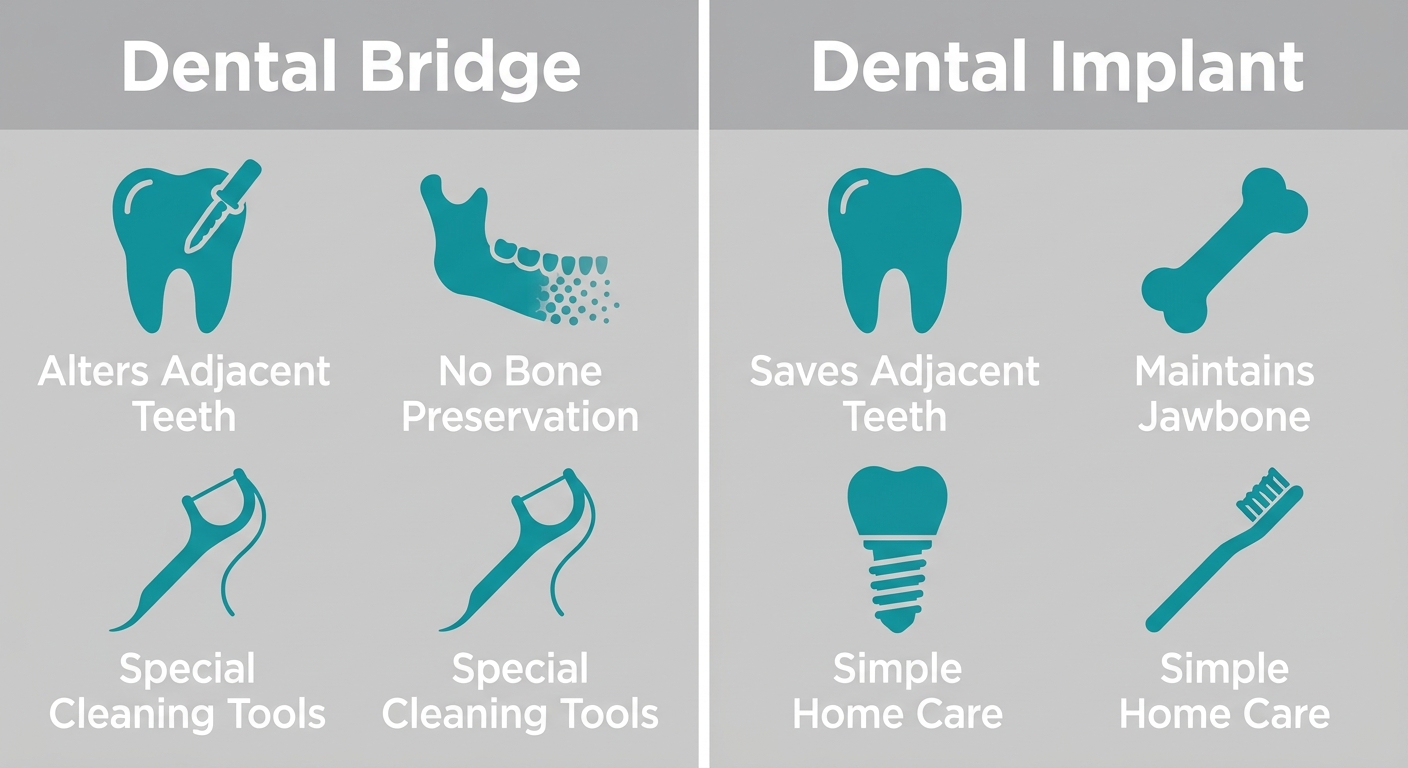
This table summarizes key risk factors and how bridges compare to implants.
| Risk Factor | Implication for Dental Bridges | Implication for Dental Implants |
|---|---|---|
| Tooth Preservation | Irreversible grinding of healthy adjacent teeth | No effect on neighbouring teeth |
| Bone Health | Jawbone resorption without root stimulation | Osseointegration preserves bone density |
| Hygiene | Requires floss threaders/water flossers to clean under pontic | Simple brushing and flossing |
| Decay & Gum Risk | Plaque traps at margins increase decay/gum disease | No attachment to natural teeth lowers risk |
| Longevity | 5–15 years, dependent on abutment tooth health | >95% success over ten years, 20+ year potential |
These trade-offs explain why many patients in Port Coquitlam ask what the disadvantages of a dental bridge are before choosing a restorative path. With a clear view of each factor, you and our dental team can personalize a plan that balances function, aesthetics, and longevity.
The Impact on Healthy Adjacent Teeth
To install a bridge, the dentist shaves away enamel from the teeth on each side of the gap, to make room for the crowns that will eventually cover them. That process is irreversible — once enamel is removed, the tooth structure never regrows. Those teeth become more susceptible to sensitivity, fractures, or nerve complications later in life. If one anchor tooth weakens, the entire bridge may fail and need replacement. Unlike implants, which stand alone and do not involve neighbouring teeth, bridges trade healthy enamel for support.
Tooth Decay and Gum Disease Risks
This gap between the bridge crown and your natural tooth is like a magnet for germs. They hang out here and produce acid that wears away enamel and causes cavities in areas of the bridge. Once they have reached under the bridge, usually the only option is to remove the whole bridge for treatment. The same plaque can inflame the gums, leading to gingivitis or periodontitis that jeopardizes supporting teeth. Implants don’t have these closed pockets, which means you’re less likely to get cavities on the bridge.
Bone Loss and Structural Changes Over Time
The jaw remains dense because the natural tooth root transmits chewing force into the bone. If there is no tooth present, that stimulus ceases, and the bone begins to remodel and disappear – changing facial contours, moving neighbouring teeth as well. While a fixed partial denture restores function to the tooth above ground, it does nothing for the bone under the missing tooth area. The jaw bone can actually lose density over time due to lack of stimulation, which could affect either how a partial fits in place, or how your smile looks. An implant replaces all parts of the tooth, including the portion buried beneath gum tissue where it stimulates the jaw bone to keep its volume and density intact.
Hygiene Challenges and Cleaning Tips
Getting rid of plaque below a bridgework’s "false tooth" needs some specialized tools. Floss threaders or superflosses help pass floss under the pontic (that’s the fake tooth), where you can then move it between the pontic and the gum tissue. Without them, all that stuff gets stuck there and can make your breath stinky, irritate your gums, and cause decay in the abutment teeth (the teeth supporting the fake tooth). The good news is that taking care of implants is pretty easy. Just brush and floss like normal around the replacement crown because they have no underside to gather plaque.
That said, many patients still manage them well with appropriate treatment and routine follow-up visits.
Managing and Maintaining Your Dental Bridge for Long-Term Health
Yet with proper maintenance, a bridge’s lifespan can be significantly extended despite any concerns. Knowing what the lifespan of a dental bridge is helps you set realistic expectations and commit to a care routine that keeps your smile healthy for years. If you want your smile to stay bright as long as possible you need to take good care of your mouth.
Effective Cleaning Techniques for Dental Bridges
Cleaning the area under a dental bridge is also very important because if there is too much food debris and bacteria here then it may cause decay in your natural teeth or lead to gum disease. As the pontic (false tooth) lies right up against the gum, you can find that food and bacteria collect there pretty quickly.
- Floss threader or superfloss: Pass the threader beneath the pontic, thread regular floss or superfloss through it, and then gently pull the floss back and forth along the underside.
- Water flosser: Set the device to a comfortable pressure level, aim the tip at the gumline under the bridge, trace along the base of the pontic.
- Interdental brush: Use a narrow brush to clean the space between the anchor crowns and the gums, removing plaque that floss might miss.
- Brush all bridge surfaces twice a day with a soft toothbrush and fluoride toothpaste.
Recognizing Repair and Replacement Needs
At our newly built, modern clinic in Port Coquitlam, we encourage patients to watch for these warning signs and contact us if any appear:
- Mobility: Any feeling that the bridge is loose or shifting when you chew often points to a problem with the cement or the supporting teeth.
- Sensitivity: Discomfort with hot, cold, or sweet foods may signal decay forming underneath an anchor crown or at the margin where the bridge meets the tooth.
- Visible decay or cracks: Dark lines or roughness along the edge of the bridge, especially around the gumline, usually mean the tooth structure is weakening.
- Persistent bad taste or odor: A continuous unpleasant taste can indicate trapped bacteria or decay below the bridge.
- Swollen or bleeding gums: Gums that remain red and bleed easily when you clean around the bridge suggest an inflammatory response.
Regular dental check-ups let us catch these changes before they lead to bridge failure, so we recommend scheduling an exam at least twice a year.
Expected Lifespan of a Dental Bridge
A normal dental bridge generally lasts anywhere from five to fifteen years, depending on whether there have been any complications regarding the health status of the supporting teeth. The life span will be shorter if good at-home oral hygiene is not maintained or if the abutment teeth deteriorate.
Here’s how they compare on a long-term basis and for the needs required when it comes to their daily upkeep:
| Aspect | Dental Bridge | Dental Implant |
|---|---|---|
| Expected Lifespan | 5–15 years, depending on maintenance and oral health | 10+ years with a 95% success rate over ten years; often lasts 20 years or longer |
| Maintenance Requirements | Requires specialized cleaning under the pontic with floss threaders, superfloss, or water flossers | Cleaning similar to natural teeth; no additional tools for the restoration itself |
| Bone Health | Does not stimulate the jawbone; can lead to bone loss over time | Preserves jawbone density through osseointegration |
| Adjacent Teeth Effect | Requires grinding down of neighboring teeth to act as anchors | No reduction of adjacent teeth; implant is independent |
Provided that you take good care of the bridge it can last a long time, but also consider how the bridge fits into your overall oral health.
Long-Term Oral Health Considerations for Bridge Wearers
A huge disadvantage of a dental bridge lies in how it affects your other healthy tooth structure and the jawbone beneath them over the years.
Above is a comparison that showcases some of the main differences between dental bridge and implant treatment methods as far as long term oral health goes.
| Outcome | Dental Bridge | Dental Implant |
|---|---|---|
| Longevity | Lasts 5 to 15 years before replacement is typically needed. | Demonstrates a 95% success rate over a ten-year period. |
| Effect on Adjacent Teeth | Requires grinding down healthy neighboring teeth to serve as anchors. | Does not require any modification of adjacent teeth. |
| Bone Health | Does not stimulate the jawbone beneath the pontic (false tooth). | Preserves bone volume through osseointegration. |
| Maintenance | Requires specialized cleaning under the pontic with floss threaders or a water flosser. | Can be cleaned with standard brushing and flossing, like a natural tooth. |
A bridge relies completely on its abutments for support, thus leaving these teeth open to decay and fatigue for all time that the bridge exists.
A critical long-term concern that many Port Coquitlam patients ask about is jawbone preservation. Because a bridge sits above the gumline without a root-like structure extending into the jaw, the bone beneath the pontic receives no stimulation during chewing. Our team explains that without that stimulation, the bone gradually resorbs, which can alter facial contours over many years. A dental implant, by contrast, integrates directly with the jawbone through osseointegration, preserving bone volume much like a natural tooth root would.
Because the underside of pontics on these kinds of bridges can’t be easily brushed, cleaning them requires using things such as a floss threader or a water flosser. Despite careful home care, pontics may still need replacement due to weakness or decay affecting the support teeth.
That’s another reason that we recommend that our patients ask thorough questions about all their tooth replacement options before treatment begins.
Your Dental Bridge Questions Answered
Wondering what the downside of a dental bridge is?
There are some drawbacks to this procedure. The two anchor teeth that support the bridge will still be at risk for tooth decay and wear out over time. In addition, a fixed bridge will not actually stimulate your jawbone in any way, so you won’t retain the volume of your jaw as you would if you had a dental implant placed instead. What is the downside of a dental bridge?
A dental bridge can be expected to last anywhere between 5-15 years while implants will typically outlive their counterparts for more than twice that time period (20 years plus). How long does a dental bridge last?
Is cleaning underneath your dental bridge tough? In order for you to properly care for them on a regular basis, you must use particular floss or an interdental brush to do this work. Is it hard to clean under a dental bridge?
Does a dental bridge damage adjacent teeth? They require reshaping to receive crowns, which can increase their vulnerability to decay and structural issues over time. Does a dental bridge damage adjacent teeth?
To find out extra info regarding this area, check out our team at The Grove Dentistry.
Frequently Asked Questions
Does getting a dental bridge require filing down healthy adjacent teeth?
Yes, getting a dental bridge does require filing down the healthy adjacent teeth. The dentist must shave away enamel from the neighboring teeth to make room for crowns that anchor the bridge, and this enamel removal is irreversible. This process can weaken the abutment teeth over time.
Can dental bridges increase the risk of tooth decay or gum disease?
Yes, dental bridges can increase the risk of tooth decay and gum disease. Plaque easily accumulates at the margin where the crown meets the natural tooth and under the false tooth, which can lead to cavities on the abutment teeth and gum inflammation.
How often do dental bridges need to be repaired or replaced?
Dental bridges typically need replacement every five to fifteen years. The actual timeline depends on the health of the supporting abutment teeth and how well the bridge is maintained. Without proper oral hygiene, decay or structural issues can shorten this period.
Do dental bridges prevent bone loss in the jaw like dental implants do?
No, dental bridges do not prevent bone loss in the jaw like dental implants do. A bridge does not stimulate the jawbone beneath the missing tooth, so bone resorption can occur over time. In contrast, an implant fuses to the bone through osseointegration and helps preserve bone density.
Is it difficult to clean and floss around a dental bridge?
Yes, cleaning around a dental bridge requires extra effort and specialized tools. Floss threaders, superfloss, or a water flosser are needed to reach underneath the false tooth, as standard brushing and flossing cannot access that area. Daily cleaning with these tools helps prevent decay and gum irritation.
Partner with The Grove Dentistry for Your Restorative Care
Implants preserve jawbone volume and don’t require modifying neighbouring healthy teeth, a frequent downside of traditional dental bridges. With success rates between 95 and 98 percent over a decade, implants promote lasting oral health.
If you are wondering what is the downside of a dental bridge for your situation, we invite you to visit us for one of our free dental implant consultations. Results vary by individual, so we welcome you to consult our team for a professional assessment and tailored advice.
Book Your Free Implant Consultation
Now that you’ve learned about the potential downsides of a dental bridge, including the irreversible reshaping of healthy adjacent teeth and the lack of bone stimulation, you might be considering an alternative. Dental implants offer a way to replace missing teeth without altering neighboring teeth and actively preserve your jawbone through osseointegration. With a reported 95% success rate over ten years, implants provide a long-lasting, durable solution compared to the typical five- to fifteen-year lifespan of a bridge. At The Grove Dentistry in Port Coquitlam, we offer free, no-obligation implant consultations to help you determine if this restorative option is right for you. To learn more or schedule your visit, call us at (604) 941-2211 or explore our dental implant services. Our team is committed to guiding you through every step, from initial assessment to final restoration, with care that prioritizes your long-term oral health.


