

Table of Contents
Dry Mouth Doesn’t Have to Slow You Down
Practical dry mouth tips for seniors start with understanding that xerostomia is common in older adults and often stems from medications like antihistamines or blood pressure drugs. About 30% of adults over 65 and roughly 40% over 80 live with this condition, but it doesn’t have to disrupt daily life. Reduced saliva raises cavity risk, which is why proactive attention matters. Our team promises a friendly and accommodating experience while helping you manage dry mouth with simple daily habits.
The right way can keep your mouth comfortable and protect your smile!
Key Takeaways
- We usually see elderly people taking care of dry mouth just by drinking more water regularly.
- Saliva is what keeps the mouth moist, particularly helpful for seniors suffering from dry mouth.
- For many seniors, dry mouth at night can feel more intense because saliva flow naturally slows during sleep.
- After you’ve tried at-home remedies to relieve your nighttime dry mouth, the next step is to talk with your care team about the medications you’re taking.
- The best dry mouth tips for seniors focus on protecting your teeth from decay, since this becomes a major issue as we get older.
1. Sip Water Consistently Throughout the Day
We usually see elderly people taking care of dry mouth just by drinking more water regularly. Small, frequent sips make the mouth moist without having to drink too much at once and then experience dryness between sips.
Dry mouth among elderly people often results from medications like diuretics, antihistamines and antidepressants, so keeping hydrated is especially important for them.
Drink a water bottle throughout the day, take a sip with every meal or snack, and set gentle reminders on your phone to drink between activities. These can serve as anchors, helping to blend hydration with the natural flow of our day without it seeming like an extra step. Taking a quick sip every few hours can really make a difference.
If you are still experiencing dry mouth after trying all of the above, bring it up during your next dental visit and we can discuss other options to try at home.
2. Switch to Alcohol-Free Mouth Rinses
Building on consistent hydration habits, one of the simplest yet most effective dry mouth tips for seniors is swapping to an alcohol-free mouth rinse. Many seniors experience dry mouth as a side effect of common medications like diuretics, antihistamines, or antidepressants, and these rinses provide gentle relief without the drying effects of alcohol-based formulas.
We suggest alcohol free rinses for seniors wearing dentures as these help keep the area around the mouth moist, allowing the dentures to stay comfortably seated while also reducing irritation. If you or someone you love is wearing dentures, you might find some relief in making this small adjustment to your routine. Our tips for senior oral health explain that alcohol free rinses are a non-prescription option to relieve dry mouth from the side effects of medications.
Then add in habits that increase your saliva production such as chewing sugar-free gum to help keep moisture levels up and your mouth feeling fresh all day long.
3. Chew Sugar-Free Gum to Boost Saliva
Saliva is what keeps the mouth moist, particularly helpful for seniors suffering from dry mouth. An easy way to encourage your body to produce more saliva naturally is to chew some sugar free gum after eating.
The American Dental Association states that the mechanical act of chewing can increase salivary flow by 10-12 times, moistening the mouth and removing food bits. We often recommend chewing sugar-free gum for around 20 minutes after meals, as this may help reduce the risk of cavities while making your mouth more comfortable.
Choose gum sweetened with noncariogenic sweeteners such as xylitol, sorbitol or sucralose. These sweeteners won’t cause cavities and are great options for daily use. The only gums to receive the ADA Seal of Acceptance are sugar-free gums, so this is something to look out for in the store when making your choice.
Adding this low effort habit in between your meals can help keep your mouth at ease all day long.
4. Ease Dry Mouth at Night
For many seniors, dry mouth at night can feel more intense because saliva flow naturally slows during sleep. One of the most useful dry mouth tips for seniors is to keep a glass of water by the bedside and take small sips before turning in; staying hydrated supports moisture levels without disrupting rest. We recommend using an alcohol-free mouth rinse as part of the bedtime routine, since alcohol-based rinses can further dry oral tissues and worsen discomfort overnight.
While these comfort measures may help alleviate nighttime dry mouth in seniors, they won’t treat the underlying problem. If seniors are still experiencing dry mouth at night after taking these steps, it may be time to talk to their care team about medications, since many common prescriptions can lead to xerostomia.
5. Talk to Your Care Team About Medications
After you’ve tried at-home remedies to relieve your nighttime dry mouth, the next step is to talk with your care team about the medications you’re taking. Over 100 medications have been linked to salivary gland dysfunction, so be sure to share the complete list of your medications during your dental visits so we can help identify possible causes and coordinate care with your prescribing physician.
Medications that commonly cause this include blood pressure medications, antihistamines, diuretics and antidepressants – all of which often lead to xerostomia, the medical term for dry mouth. With approximately 30% of people over the age of 65 suffering from the condition, talking about drug related dry mouth is common and not embarrassing at all. Your dental team can work with your doctor to make changes or adjustments, but they aren’t diagnosing or altering medications.
Make sure to bring a current list of medications to your next appointment and let us know if you are taking any new prescriptions that may cause dry mouth. You can also ask how often you should have your teeth cleaned; seniors with persistent dry mouth often benefit from seeing us every 3-4 months rather than every six months.
Protect Your Teeth from Decay
The best dry mouth tips for seniors focus on protecting your teeth from decay, since this becomes a major issue as we get older. With root cavities affecting around half of people over 75 on at least one tooth, decay prevention is something we have to be concerned about our entire lives.
Dry mouth is quite common among older people, affecting around 30% of adults over 65 and up to 40% of those over 80. Many medicines reduce saliva production, and saliva washes away food particles and neutralizes acids that damage tooth enamel.
We recommend brushing your teeth twice daily with a fluoride toothpaste and cleaning between your teeth daily. These habits help protect the exposed root surfaces where older adults often develop decay. Using fluoride strengthens enamel and helps prevent cavities even when saliva flow is reduced.
If you have dry mouth or sensitivity, please let us know the next time you’re here so we can work on your oral care together!
Care for Dentures and Removable Appliances
If you have had some, or all, of your teeth replaced by dentures or a removable appliance, your daily care will be slightly different. We advise gently brushing your dentures each day using a soft bristled brush and a non-abrasive cleanser in order to remove plaque without scratching the surface. After meals, rinse your dentures and mouth to help reduce bacteria build-up and keep your appliance fresh.
At night, soak your dentures in a proper solution to keep them hydrated and maintain their shape. DO NOT use hot water—it can warp the material permanently, so always check that the water is lukewarm before cleaning or rinsing.
For those who experience dryness, drinking more water and using alcohol-free mouth rinses may provide some relief and allow the dentures to sit more comfortably. Though at-home care is essential for proper oral hygiene, routine dental appointments are still necessary since the fit of dentures changes over time as the mouth’s anatomy changes with age.
Know When to See Your Dentist in Port Coquitlam
Though you may have the best at-home oral care regimen, certain changes inside your mouth might be telling you it’s time to call the pros. Some dry mouth tips for seniors can help you realize when it’s time to make that appointment before little problems become bigger ones.
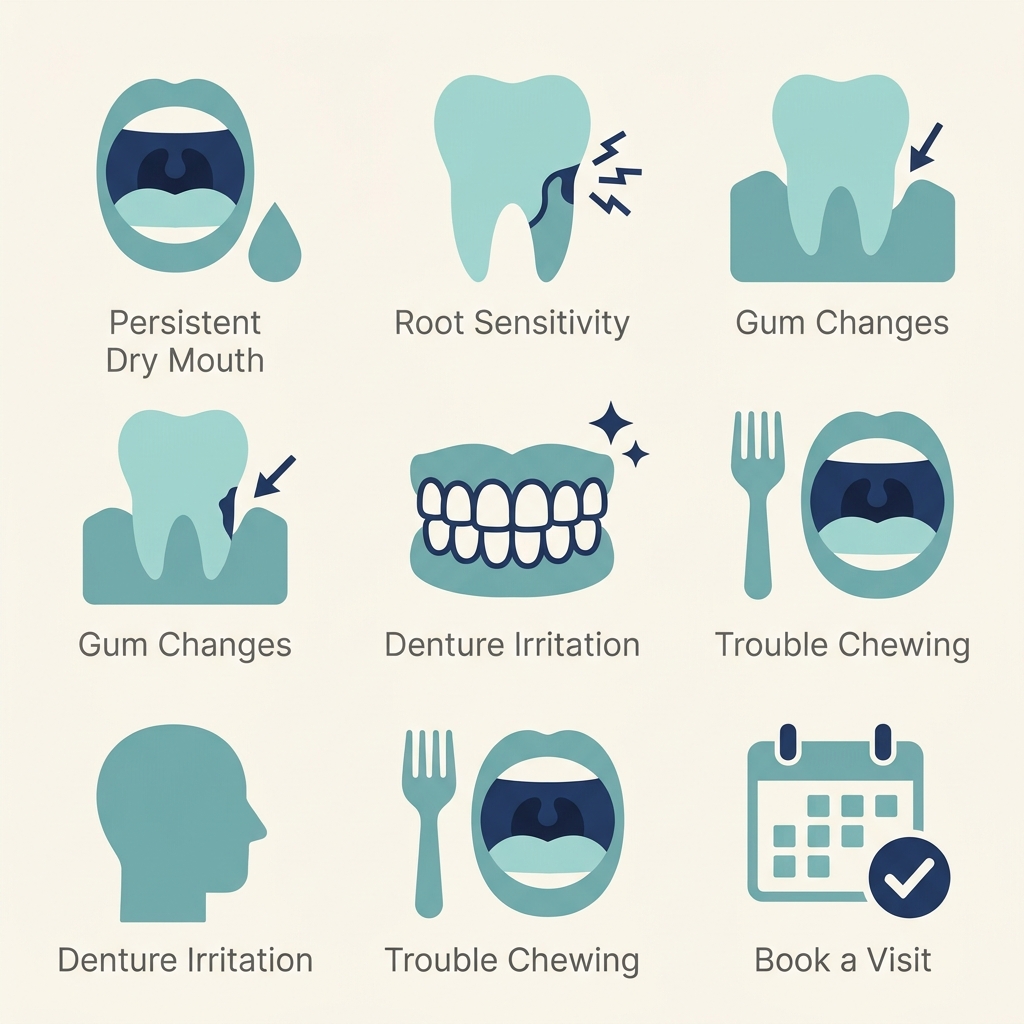
- Persistent dry mouth that won’t settle with hydration or saliva substitutes
- New or worsening sensitivity on your tooth roots from gum recession
- Changes in your gums, especially bleeding or swelling that doesn’t improve
- Denture irritation, poor fit, or tissue soreness that persists despite careful cleaning
- Trouble chewing or speaking because of missing teeth or loose dentures
If any of them persist for more than a few days, or just feel different from what you’re used to, then it’s time to give us a call. Seniors with good oral health should have their teeth professionally cleaned every six months, while those who suffer from chronic dry mouth should get it done every 3-4 months.
Give us a call in Port Coquitlam today to book your next appointment – we’re here to help make sure your smile stays comfy and confident.
Frequently Asked Questions
Why do seniors experience dry mouth more frequently than younger adults?
Seniors experience dry mouth more frequently because many common medications such as antihistamines, blood pressure drugs, diuretics, and antidepressants reduce saliva production. Xerostomia affects roughly 30% of adults over 65 and up to 40% over 80.
What are some simple daily tips to relieve dry mouth symptoms for seniors?
Seniors can relieve dry mouth symptoms by sipping water consistently, using alcohol-free mouth rinses, chewing sugar-free gum, and keeping a glass of water by the bedside at night. These habits help maintain moisture and support saliva production without irritation.
How does chronic dry mouth affect oral health and increase the risk of tooth decay?
Chronic dry mouth reduces saliva, which normally washes away food particles and neutralizes acids that damage tooth enamel. This increases the risk of cavities, especially on exposed root surfaces common in older adults.
Are there specific medications common in seniors that typically cause dry mouth?
Yes, medications such as antihistamines, blood pressure drugs, diuretics, and antidepressants are commonly linked to dry mouth in seniors. Over 100 medications have evidence linking them to salivary gland dysfunction.
When should a senior consult a dentist about persistent dry mouth issues?
A senior should consult a dentist if dry mouth persists despite home remedies, if there is new or worsening root sensitivity, gum changes like bleeding or swelling, denture irritation, or difficulty chewing or speaking.
Small Habits, Big Comfort for Senior Smiles
One of the best dry mouth tips for seniors is to create little daily habits to keep oral comfort in check. Staying hydrated, combating dryness from common medicines such as blood pressure meds, and using gentle brushing methods will help to maintain natural teeth and protect sensitive roots. Bring your whole medicine list to our team so that we can customize our care for you and watch out for gum recession or root sensitivity before they get too uncomfortable.
Come in for a check-up if you’re a senior living in Port Coquitlam so we can celebrate your lifetime of comfort together. Remember that results may vary and outcomes depend on individual circumstances, so always consult a dental professional for personal advice.
Book Your Senior Dental Visit
You’ve now worked through the full range of dry mouth tips for seniors, from sipping water consistently and switching to alcohol-free rinses to easing dryness at night and caring for dentures. You also know why sharing a complete medication list with your dental team matters, since many common prescriptions affect saliva flow. These small daily habits protect your teeth from decay and keep your smile comfortable in later life. Even the best home routine benefits from professional oversight, especially with persistent dry mouth that may call for cleanings every 3-4 months. Our team at The Grove Dentistry in Port Coquitlam welcomes seniors and families from across the Tri-Cities. We can review your concerns, monitor gum recession and denture fit, and help you build a routine that works. Call us at (604) 941-2211 or book your visit today to put these habits into practice with professional support.


