

Table of Contents
- Toothache Relief at Home: Effective Remedies and Professional Care
- Understanding Toothache Causes and Early Symptoms
- Powerful Home Remedies for Toothache Relief
- Step-by-Step Guide to Using Home Remedies Safely
- Recognizing Signs That Require Professional Dental Care
- Frequently Asked Questions About Toothache Relief
- Take Charge of Your Toothache: Home Care and Professional Support
Toothache Relief at Home: Effective Remedies and Professional Care
When toothache strikes, toothache relief at home can offer temporary comfort while you arrange to see us. These simple measures may help reduce inflammation and ease discomfort, but they do not address the underlying cause of your pain, so prompt professional assessment remains essential.
A saltwater rinse for toothache is easy to prepare and one of the first things we recommend. Dissolve half a teaspoon of salt in a glass of warm water, swish it gently around your mouth for about 30 seconds, then spit it out. According to the NHS, this rinse helps cleanse the area and can temporarily soothe irritated gums, but it does not treat decay or infection.
Clove oil for toothache is a traditional remedy that contains eugenol, a natural numbing agent. Apply a single drop of diluted clove oil to a cotton swab and dab it lightly onto the affected tooth, avoiding direct contact with your gums. As Parkside Dental Group explains, toothaches often stem from issues such as cracks, deep decay, or abscesses that require professional diagnosis, and home measures only mask the pain while the problem worsens.
These home measures can help you manage discomfort, but if pain persists beyond a day or two, or if you notice swelling, fever, or a bad taste, it is time to seek help. When you need toothache emergency care, our team is ready to provide a same-day assessment at our Port Coquitlam clinic. We also offer evening availability on Wednesdays to make urgent visits more convenient.
Treatment outcomes are not guaranteed and depend on individual circumstances. Consult a healthcare professional for diagnosis or treatment advice.
Understanding Toothache Causes and Early Symptoms
To understand your toothache, it helps to know what causes it and what early signs to look for. At The Grove Dentistry in Port Coquitlam, patients often seek toothache relief at home, but recognizing the symptoms early is key. According to the NHS, common causes include dental cavities, gum infections, cracked teeth, and abscesses — each with distinct signs. Parkside Dental Group also outlines these conditions. By identifying your symptoms, you can make informed decisions about seeking professional care.
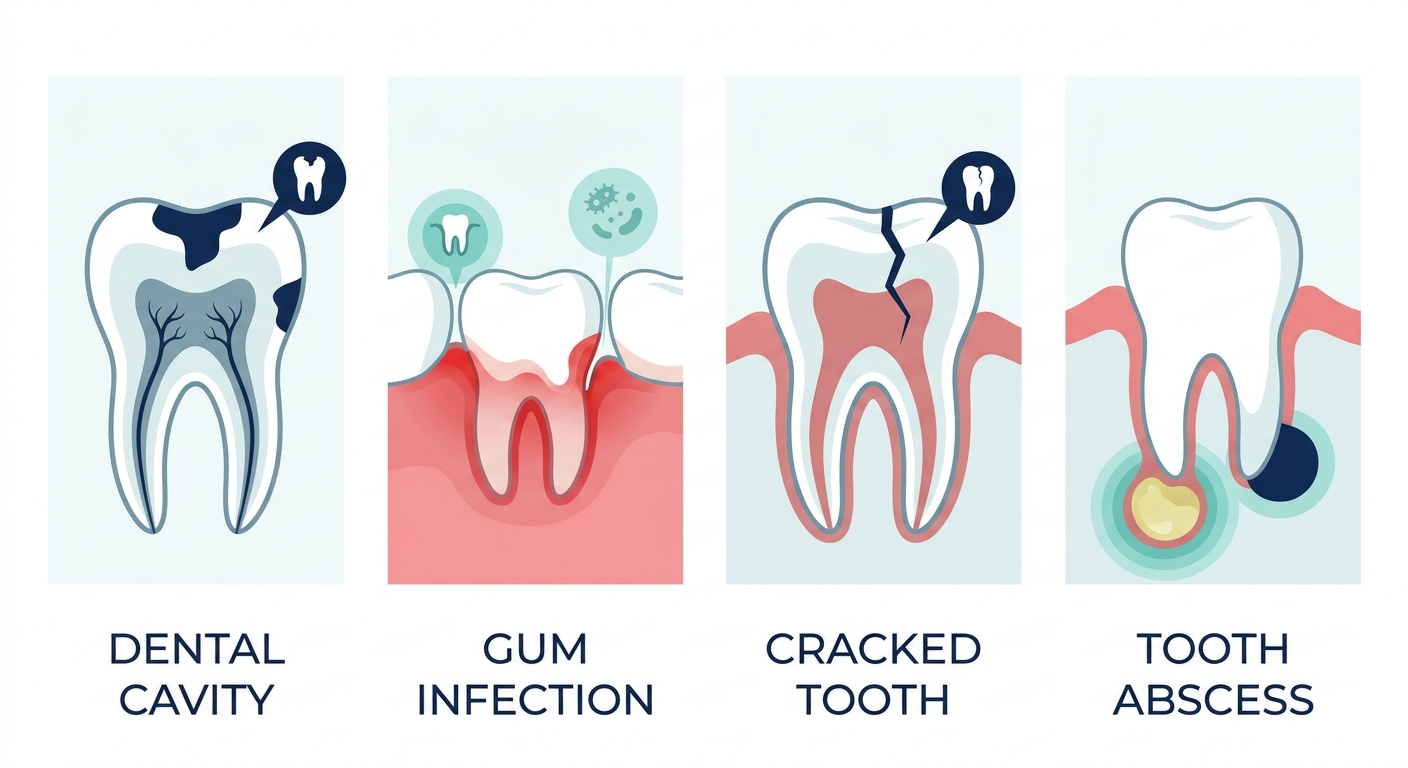
Four common toothache causes illustrated in a clean horizontal layout
To help you differentiate these conditions, the table below summarizes the most common toothache causes, their symptoms, and how long they typically last.
| Cause | Symptoms | Typical Duration |
|---|---|---|
| Dental Cavity | Sharp pain when eating sweet/hot/cold; visible hole | Intermittent; worsens over time |
| Gum Infection | Pulsating pain; swollen gums; bad taste | Persistent until treated |
| Cracked Tooth | Pain when biting; sensitivity to temperature changes | Variable; often sharp and sudden |
| Abscess | Severe constant pain; swelling; fever; pus | Continuous; emergency required |
Let’s look at each cause in more detail.
A dental cavity creates a small hole in the enamel, causing sharp pain when eating sweet, hot, or cold foods. You may see a visible hole. The NHS notes this intermittent pain worsens over time. While a saltwater rinse for toothache can temporarily soothe, it won’t stop decay. If the cavity reaches the nerve, you may need root canal pain relief to save the tooth.
A gum infection presents with pulsating pain, swollen gums, and a persistent bad taste. These symptoms remain until treated. The Parkside Dental Group emphasizes that early signs like bleeding gums shouldn’t be ignored. A clove oil for toothache remedy may reduce discomfort, but professional cleaning or antibiotics are needed.
A cracked tooth causes pain when biting and sensitivity to temperature changes. This pain can be sharp and sudden. The NHS describes it as unpredictable. Since cracks allow bacteria inside, evaluation is essential.
An abscess involves severe constant pain, swelling, fever, and pus. Classified as a dental emergency, it requires immediate attention. Swelling around the eye or neck with breathing difficulty means go to A&E. No home remedy can treat an abscess — call your dentist right away.
Now that you understand the causes, let’s explore relief options and when to see a dentist. Welcome to Grove Dentistry, where our team promises a friendly and accommodating experience. Whether you need root canal pain relief or a routine check-up, we use modern technology to help you smile comfortably. This information is for educational purposes only and does not replace professional dental advice. Results may vary; consult a healthcare professional for diagnosis or treatment advice. We look forward to seeing you in our Port Coquitlam clinic!
Powerful Home Remedies for Toothache Relief
Toothache relief at home can provide much-needed comfort while you wait for a dental appointment. These simple, natural toothache remedies are meant to reduce discomfort temporarily, giving you time to schedule professional care. Remember, they do not cure the underlying cause, but they can make the wait more bearable.
Salt Water Rinse for Toothache Relief
A saltwater rinse for toothache is one of the easiest and most effective first steps. Salt water rinse helps reduce inflammation, draws out fluid from swollen tissues, and gently cleanses the area around the painful tooth. According to Parkside Dental Group, the mild antiseptic properties of salt can also discourage bacterial growth that contributes to irritation.
To use it, mix half a teaspoon of table salt into a cup of warm water. Swish the solution around your mouth for about 30 seconds, focusing on the sore spot, then spit it out—do not swallow. Repeat this up to twice a day. It is a safe, gentle way to soothe gum inflammation and minor toothaches while you arrange to see a dentist.
Clove Oil for Toothache: Natural Pain Relief
Clove oil for toothache has been a trusted remedy for generations, and with good reason. Clove oil contains eugenol, a natural compound that numbs nerve endings and offers antimicrobial benefits. Parkside Dental Group notes that this traditional remedy can temporarily dull severe throbbing pain when applied correctly.
For safe use, dilute a few drops of clove oil with a carrier oil like olive or coconut oil. Dip a cotton swab into the mixture and press it gently against the affected tooth, avoiding the gums and tongue. Hold it in place for a few minutes, then remove it. Do not overuse clove oil, as it can irritate soft tissues if applied too frequently. This method can give you short-term relief but is not a substitute for professional dental evaluation.
Cold Compress and Other Soothing Methods
Cold therapy is another reliable way to manage toothache pain, especially when swelling is present. Cold compress constricts blood vessels, which reduces inflammation and numbs the area. Wrap an ice pack or a bag of frozen vegetables in a thin cloth and apply it to the outside of your cheek for 15–20 minutes, then take a 15–20-minute break. Repeat as needed throughout the day, but never place ice directly on the skin or inside the mouth.
Over-the-counter pain relievers can also help. Ibuprofen or acetaminophen, taken according to the package directions, may lessen discomfort until you can be seen. Avoid placing aspirin directly on the gums, as this can cause chemical burns. Parkside Dental Group emphasizes that these medications are for temporary symptom management and should not replace a dental visit.
While these remedies can offer welcome relief, they do not address the root cause of a toothache. The pain may be a sign of decay, infection, or damage that requires more advanced care. If your discomfort continues or worsens, we encourage you to seek professional root canal pain relief from your dentist.
At The Grove Dentistry, our caring team is ready to diagnose the problem and provide lasting treatment in a comfortable, modern setting. The next section will explore when professional dental care, including root canal therapy, becomes necessary.
Results may vary. Consult a healthcare professional for diagnosis or treatment advice.
Step-by-Step Guide to Using Home Remedies Safely
Welcome to Grove Dentistry’s guide to safe toothache relief at home. When a toothache strikes, the right home care can ease discomfort until you can see our team. However, it’s essential to follow exact instructions—using remedies incorrectly can cause harm. We’ve created this step-by-step guide to help you manage pain safely, with clear do’s and don’ts for three common approaches. Remember, these are temporary measures, not cures; results may vary and you should consult a healthcare professional for diagnosis or treatment advice.
For a quick overview, the table below summarizes safe usage guidelines:
| Remedy | How It Works | Best For | Precautions |
|---|---|---|---|
| Salt Water Rinse | Reduces inflammation; cleans area; mild antiseptic | Gum inflammation; minor irritation | Do not swallow; use warm water; not for open wounds |
| Clove Oil | Contains eugenol; numbs nerve endings; antimicrobial | Severe toothache pain | Dilute with carrier oil; apply with cotton; avoid overuse |
| Cold Compress | Constricts blood vessels; reduces swelling; numbs pain | Swelling from injury or infection | Use 15 min on/15 min off; wrap in cloth; avoid direct ice on skin |
| Over-the-Counter Pain Relievers | Ibuprofen or acetaminophen reduce pain and inflammation | General toothache | Follow dosage; avoid aspirin on gums; check interactions |
Now let’s walk through each remedy in detail, ensuring you have everything you need for safe, effective relief.
Preparing a Salt Water Rinse
A saltwater rinse for your toothache is one of the simplest yet most effective ways to reduce oral bacteria and soothe irritated gums. We recommend you start with exactly 1 teaspoon of salt dissolved in 8 ounces of warm water—never use hot or xcold. Swish the solution gently around the affected area for 30 seconds, then spit it out completely. Do not swallow it. You can safely repeat this rinse two to three times daily, but stop if you notice any mouth sores or irritation developing. Our dental team advises this rinse helps keep the area clean and can reduce inflammation temporarily, but it is not a substitute for professional care.
Applying Clove Oil Correctly
Clove oil application for toothache provides a natural numbing effect thanks to its active ingredient, eugenol. To use it safely, always dilute 2 to 3 drops of clove oil with a carrier oil such as olive or coconut oil. Dip a clean cotton swab into the mixture and gently dab it onto the affected tooth—never apply it directly to the gum. Never use more than three drops, and do not ingest clove oil, as it can cause irritation or toxicity. Our team advises this precise method to avoid chemical burns or gum damage. While clove oil can offer temporary relief, remember it only addresses the symptom—the underlying cause still needs a dentist’s evaluation.
Using Cold Compresses and When to Take Pain Relievers
A cold compress is an excellent way to numb pain and control swelling. Wrap several ice cubes in a clean cloth; never apply ice directly to your skin. Hold the compress against your cheek for 15 minutes, then remove it for at least a 15-minute break before reapplying. This 15-on/15-off cycle helps protect your skin and tissues. If pain persists, over-the-counter pain relievers like ibuprofen or acetaminophen can be taken according to package instructions—never exceed the recommended dose. Crucially, if swelling is linked to a dental abscess, a cold compress alone is not sufficient. In that case, you may need dental abscess treatment rather than just home care. If pain worsens or swelling spreads, contact our team immediately.
If pain persists or swelling worsens, these steps are not enough—contact our team for an evaluation. We’re here to help you move from temporary relief to a lasting, healthy smile.
Recognizing Signs That Require Professional Dental Care
While these home methods can help, it is important to know when a toothache requires professional care. A persistent toothache lasting more than two days indicates the need for a dental appointment with our team at The Grove Dentistry. While you may find temporary toothache relief at home with remedies such as a saltwater rinse for toothache or even clove oil for toothache, these measures should never replace a professional evaluation. We are here to help you distinguish between manageable symptoms and those that demand immediate intervention.
Swelling of the face or jaw, especially when accompanied by pain, signals a potential infection and requires urgent dental attention. According to the National Health Service, a dental abscess is a build-up of pus in the teeth or gums that will not resolve on its own and requires urgent treatment by a dentist. If the swelling spreads rapidly or begins to affect your breathing, you should seek immediate care at an emergency room. Similarly, a fever accompanying a dental symptom may suggest a systemic infection, and you should consult a medical professional first.
Uncontrollable bleeding from the mouth or after a dental procedure is another clear sign to go to the emergency room directly. For patients in Port Coquitlam, our team at The Grove Dentistry offers evening appointments for urgent concerns, providing a direct path to care.
Understanding the underlying issues is key. According to Parkside Dental Group, severe throbbing pain, fever, or swelling lasting beyond 48 hours after a procedure requires immediate contact with a dental provider. For more information on the cost of specific treatments like dental implants, visit our page on dental implants cost in British Columbia.
Our team at The Grove Dentistry is ready to help with any emergency or follow-up care. Our team promises a friendly and accommodating experience. We look forward to seeing you at our clinic in Port Coquitlam.
Results may vary; consult a healthcare professional for diagnosis or treatment advice.
Frequently Asked Questions About Toothache Relief
Now that you know when a toothache needs emergency attention, here are answers to common questions about toothache relief at home with safe, evidence-based options.
What are the best at-home remedies?
As Parkside Dental Group suggests, try these:
- Saltwater rinse — a saltwater rinse for toothache eases inflammation.
- Clove oil — clove oil for toothache numbs the nerve.
- Cold compress — reduces swelling.
- Over-the-counter pain relievers — ease pain.
Avoid placing aspirin on gums or using alcohol; these burn tissue. These methods provide fast toothache relief at home, but a dentist should evaluate ongoing pain.
When should I see a dentist?
Seek care for swelling, fever, or pain over two days. Near London? Visit a dental and medical clinic in London.
Home remedies offer temporary relief. Our team promises a friendly and accommodating experience. If pain persists, schedule a visit — we look forward to seeing you! Disclaimer: Not a substitute for professional advice; see a dentist if symptoms worsen.
Take Charge of Your Toothache: Home Care and Professional Support
A sudden toothache can be distressing, but simple toothache relief at home steps can ease discomfort while you arrange care. According to the NHS, rinsing with a warm saltwater rinse for toothache (1/2 teaspoon salt dissolved in water) can soothe irritated gums. Applying diluted clove oil for toothache to a cotton ball and holding it near the sore tooth may temporarily numb the area.
These remedies provide comfort — not a cure. If pain lasts beyond two days, or you develop fever, facial swelling, or trouble swallowing, see a dentist promptly. For toothache relief at home that falls short, our team at The Grove Dentistry offers emergency appointments in Port Coquitlam. Results may vary. Consult a healthcare professional for diagnosis or treatment advice.
Resources
- Discover Dental Implant Costs in British Columbia
- Use OTC Meds for Root Canal Pain Relief
- Relieve Root Canal Pain with Home Care
- Learn Root Canal Pain Duration and Healing
- Identify Root Canal Red Flags for Safety
- Find Affordable Dental Implants in British Columbia
- Manage Root Canal Pain at Home Effectively
- Get Dental Abscess Treatment Guidance
- Find Toothache Emergency Care Tips
- Discover Comprehensive Care at London Clinic


