

Table of Contents
- Tooth Abscess Symptoms and Treatment: A Guide for Port Coquitlam Patients
- Understanding Tooth Abscess: Causes, Symptoms, and Development
- Advanced Insights into Tooth Infection Stages and Emergency Interventions
- Managing Tooth Abscess at Home and Seeking Emergency Dental Care in Port Coquitlam
- Long-Term Treatment Outcomes and Prevention of Tooth Abscess
- Common Questions About Tooth Abscess Answered
- Trust The Grove Dentistry for Your Tooth Abscess Care
Tooth Abscess Symptoms and Treatment: A Guide for Port Coquitlam Patients
A tooth abscess is a serious bacterial infection that develops inside a tooth or in the surrounding gum tissue, often causing severe pain and swelling. Understanding tooth abscess symptoms and treatment is essential for Port Coquitlam patients, as prompt professional care can stop the infection from spreading.
Common signs of a dental abscess include a severe, persistent toothache that may radiate to the jaw or ear; heightened sensitivity to hot and cold foods; swelling in the face or cheek; fever; tender lymph nodes under the jaw; and a foul taste in the mouth from pus drainage. Recognizing these dental abscess emergency signs early can prevent the infection from advancing through the stages of tooth infection. Seeking tooth abscess symptoms and treatment promptly can save your tooth and protect your overall health.
A tooth abscess will not resolve on its own; delaying care can let the infection spread. Treatment typically involves draining the pus, prescribing antibiotics, and then a root canal or extraction. These standards align with the Canadian Dental Association—see our Canadian Dental Association resources. While awaiting your appointment, try temporary measures like saltwater rinses, but never as a substitute for professional care.
If you suspect a tooth abscess, contact The Grove Dentistry in Port Coquitlam for an emergency appointment. Our friendly team provides prompt, expert care. Please consult with a dentist for proper diagnosis and treatment; results may vary. Welcome to Grove Dentistry — we look forward to seeing you!
Understanding Tooth Abscess: Causes, Symptoms, and Development
A tooth abscess is a pocket of pus caused by a bacterial infection, often developing from untreated tooth decay, a crack, or gum disease. Understanding tooth abscess symptoms and treatment helps you act quickly. We at Grove Dentistry in Port Coquitlam want you to recognize the warning signs.
Common causes include deep dental caries that reach the pulp, tooth fractures, failed restorations, and advanced periodontitis. These allow bacteria to invade the inner tooth or gums, forming a pus-filled pocket that can damage surrounding bone.
Severe throbbing pain—sometimes radiating to the ear or neck—extreme sensitivity to hot and cold, facial swelling, fever, a bad taste from draining pus, and swollen lymph nodes are typical symptoms. The discomfort often intensifies and does not go away without professional care.
The stages of tooth infection progress from enamel decay to pulpitis, then pulp necrosis. Bacteria travel beyond the root tip to create a periapical abscess, or accumulate in the gum pocket causing a periodontal abscess. Recognizing these stages early helps you seek timely treatment.
Here is a quick comparison of the two main types of dental abscess:
| Type | Location | Cause | Symptoms | Common Treatment |
|---|---|---|---|---|
| Periapical Abscess | Tip of tooth root | Deep cavity or tooth fracture allowing bacteria to enter pulp | Throbbing pain, sensitivity to tapping, possible fever | Root canal or extraction |
| Periodontal Abscess | Gum pocket beside tooth root | Advanced gum disease (periodontitis) causing bacterial buildup | Localized swelling, pus oozing from gum, bad taste | Drainage, scaling and root planing, possible gum surgery |
Both types of dental abscess demand professional treatment, as an abscess will not heal on its own and can spread infection. Knowing the difference helps you communicate your symptoms clearly when you contact our Port Coquitlam clinic. Prompt intervention relieves pain, prevents complications, and protects your overall health.
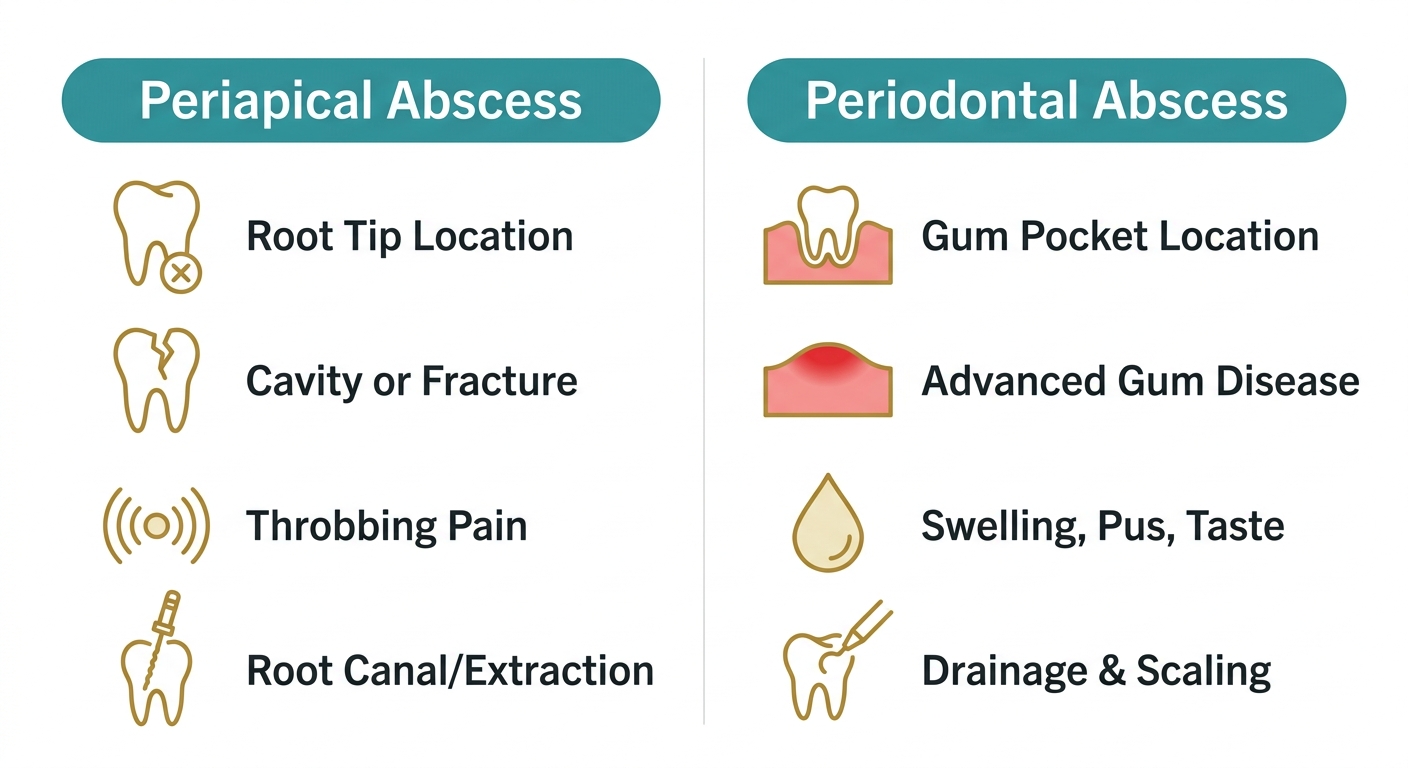
Tooth abscess differences: Periapical vs. Periodontal types illustrated.
Difficulty breathing or swallowing, rapidly spreading swelling, high fever, or a feeling of intense illness are dental abscess emergency signs. As the British Columbia Dental Association advises, these may signal a life-threatening infection. We at Grove Dentistry offer same-day assessments, and our team promises a friendly and accommodating experience. Remember, professional care is essential—a tooth abscess does not resolve without it. Understanding the abscess is the first step; next we’ll discuss how it can be treated.
Advanced Insights into Tooth Infection Stages and Emergency Interventions
Understanding tooth abscess symptoms and treatment is crucial to preventing severe complications when a tooth infection progresses through its stages. While early discomfort may seem mild, bacteria can quickly spread from the pulp into the jaw and face, leading to a dental emergency. At our clinic in Port Coquitlam, we want you to know what to watch for and how each stage calls for timely, professional care.
Stages of Tooth Infection Progression
Bacteria gain access to the tooth’s innermost pulp through a deep cavity, crack, or trauma, triggering inflammation. In the earliest stage, the pulp becomes irritated but can recover if treated promptly. As the infection advances, the pulp tissue begins to die, and bacteria multiply, pushing through the root apex into the surrounding bone and soft tissues. This migration forms a pocket of pus, known as an abscess, which can spread along facial planes, creating a systemic threat. The following table summarizes the progression through the main stages of tooth infection:
| Stage | Description | Key Symptoms | Typical Treatment |
|---|---|---|---|
| Reversible Pulpitis | Early inflammation of dental pulp; can heal | Brief sensitivity to cold/sweet; no spontaneous pain | Filling or desensitizing treatment |
| Irreversible Pulpitis | Pulp inflammation is irreversible; nerve damage | Spontaneous, prolonged pain; worse with hot/cold; may keep patient awake | Root canal therapy |
| Periapical Abscess | Infection spreads through root apex; pus pocket forms | Throbbing pain, swelling in gum/face, pus drainage, fever | Root canal or extraction; possible antibiotics |
| Cellulitis/Dental Space Infection | Infection spreads to fascial spaces; systemic involvement | Swelling extends to neck/eye, difficulty swallowing, high fever, malaise | Hospitalization, IV antibiotics, surgical drainage |
As the table shows, once a tooth reaches the irreversible pulpitis or periapical abscess stage, professional treatment becomes essential. Without root canal therapy or extraction, the infection will continue to spread, potentially leading to cellulitis, a life-threatening condition. Recognizing the signs early and seeking prompt care at our clinic in Port Coquitlam can stop the infection before it escalates.
Emergency Treatment for Dental Abscess
When you understand tooth abscess symptoms and treatment, you can act quickly. Recognizing dental abscess emergency signs—such as severe throbbing pain, facial swelling, fever, or difficulty swallowing—means you need immediate professional intervention. Our team at The Grove Dentistry in Port Coquitlam provides same-day evaluations for these urgent cases. As we emphasize in our emergency care resources, signs like swelling extending to the face or neck, a fever, and difficulty swallowing demand urgent attention.
Incision and drainage: The dentist makes a small incision in the swollen gum to release pus, providing pain relief and reducing pressure. This is often the first step before definitive treatment.
Root canal therapy: The infected pulp is removed, the root canals are cleaned and sealed, saving the natural tooth and eliminating the infection source.
Extraction: When the tooth is non-restorable or the infection jeopardizes overall health, extraction may be the safest option. We will discuss replacement options like dental implants.
Antibiotics: Prescribed to control systemic spread when fever or swelling extends beyond the tooth. Antibiotics alone cannot cure an abscess; definitive dental treatment is always needed.
According to the Canadian Dental Association, root canal therapy is indicated when the tooth structure can be preserved, while extraction is recommended for non-restorable teeth or when the infection poses an immediate risk to the patient’s health.
While toothache relief at home may offer temporary comfort, a dental abscess demands immediate professional evaluation.
In British Columbia, some emergency dental procedures may be partially covered by provincial health benefits—ask our team about eligibility when you call.
If you experience any of these symptoms, contact our Port Coquitlam office right away. Our team promises a friendly and accommodating experience from the moment you arrive. Results may vary; treatment outcomes are not guaranteed. Consult a dental professional for diagnosis. We look forward to providing you with compassionate emergency care.
Managing Tooth Abscess at Home and Seeking Emergency Dental Care in Port Coquitlam
Understanding tooth abscess symptoms and treatment is the first step toward protecting your oral health. When a painful infection strikes, knowing what you can do right now—and when to seek professional care—can make all the difference in your comfort and recovery.
Home Care for Tooth Infection Symptoms
While temporary toothache remedies can offer short-term comfort, it is crucial to understand that they do not address the underlying infection. The Grove Dentistry recommends starting with a warm salt water rinse—mix half a teaspoon of salt in eight ounces of warm water and swish gently for 30 seconds, repeating two or three times daily to help reduce bacteria and soothe inflamed gums. Second, apply a cold compress to the outside of your cheek for 15–20 minutes at a time to ease facial swelling. Third, over-the-counter pain relievers such as ibuprofen may be taken according to the label to manage discomfort, but always confirm appropriate dosage for your situation. Finally, stick to a soft diet and sleep with your head elevated to avoid putting extra pressure on the affected tooth. These steps provide a temporary bridge until you can see a dentist, yet it is important to recognize when symptoms signal a more serious problem. The Grove Dentistry cautions that signs such as severe pain that prevents sleep, a fever, or swelling that spreads toward your eye or neck are dental abscess emergency signs that mean home care is no longer enough. When you notice those red flags—or if a toothache persists beyond two days—you should stop all home care and seek professional attention immediately. While these measures offer brief relief, they cannot cure an abscess; only a dental examination can properly diagnose and treat the source of the infection.
Emergency Dental Services at The Grove Dentistry
Welcome to Grove Dentistry! When you need urgent help, our team makes it easy to receive timely care. We offer same-day appointments for dental emergencies so you can be seen as quickly as possible. For busy families and working patients, our clinic provides extended hours on Wednesday evenings, and you can book an emergency visit directly through our online scheduling system or by calling (604) 941-2211.
During your emergency visit, we will perform a thorough examination and, if needed, take a digital X-ray. This imaging allows us to see the stages of tooth infection that have developed around the root and determine whether the tooth can be saved. After diagnosis, we discuss treatment options in clear, easy-to-understand terms. Depending on the extent of the infection, we may recommend either a root canal to remove the infected pulp while preserving the natural tooth, or an extraction to completely eliminate the source of infection.
We believe in transparent pricing—no surprises. Before beginning any treatment, our team will review the costs with you and help you understand your options. For patients considering an implant after extraction, we provide free initial assessments for implant consultations. If you have coverage, the BC Healthy Kids Program may apply; according to The Grove Dentistry, eligible children receive a biennial dental coverage limit of $1,400 every two years that can be used toward examinations, X-rays, extractions, or root canals. Our team will work with you to make the most of your benefits and minimize out-of-pocket costs.
When the tooth is severely infected, you will likely face a choice between a root canal and an extraction. The following comparison can help you start the conversation with our dentist.
| Aspect | Root Canal | Extraction |
|---|---|---|
| Goal | Remove infected pulp, save natural tooth | Remove entire tooth, eliminate infection source |
| Procedure | Cleaning and sealing root canals under local anesthesia | Tooth removal under local anesthesia |
| Recovery | 1-2 weeks mild soreness; final crown later | 1-2 weeks healing; possible bone graft for implant |
| When Recommended | Tooth restorable, good bone support | Tooth non-restorable, advanced bone loss, or patient preference |
We will help you decide which path is right for you, taking into account the condition of the tooth, your overall oral health, and your personal preferences. Every case is unique, and results may vary. Our team promises a friendly and accommodating experience, and we look forward to seeing you! To discuss your symptoms and schedule an emergency appointment in Port Coquitlam, call us today—because your smile deserves prompt, compassionate care.
Consult our dentist for a personalized treatment plan. Treatment outcomes are not guaranteed and depend on individual circumstances.
Long-Term Treatment Outcomes and Prevention of Tooth Abscess
Once the immediate infection is managed, understanding tooth abscess symptoms and treatment helps you plan your recovery. At The Grove Dentistry in Port Coquitlam, we often guide patients through the long-term implications of different treatment paths. The right choice depends on the severity of the abscess and your overall oral health.
While toothache relief at home can provide temporary comfort—such as saltwater rinses or clove oil recommended by our team—these measures do not address the underlying infection. Root canal therapy eliminates infection in 83–95% of cases and preserves the natural tooth, while extraction provides immediate pain relief but results in tooth loss. No treatment, however, can lead to severe complications such as cellulitis, sepsis, or Ludwig’s angina.
The table below contrasts key long-term outcomes of these options.
| Outcome | Root Canal | Extraction | No Treatment |
|---|---|---|---|
| Pain resolution | High (pain subsides after procedure) | High (immediate relief) | Low (may temporarily subside then worsen with abscess) |
| Tooth preservation | Yes; natural tooth remains with crown | No; tooth lost | Tooth may be lost eventually |
| Infection elimination | Yes (with 83-95% success in endodontic therapy) | Yes (removal of infected tooth) | No; infection can spread |
| Complication risk | Low (reinfection possible if filling leaks) | Moderate (dry socket, infection, bone loss at site) | High (cellulitis, sepsis, Ludwig’s angina) |
While the table highlights key differences, every situation is unique. We encourage you to discuss your options with one of our dentists to determine the best course of action. After an extraction, the jawbone may lose density over time, so discussing restorative solutions such as dental implants or bridges is wise.
Preventing future abscesses starts with consistent oral hygiene habits. Brush your teeth twice daily with fluoride toothpaste, floss at least once a day, and limit sugary snacks and drinks. Attending regular check-ups every six months allows our team to catch cavities before they worsen. Awareness of the stages of tooth infection—from early decay to a full-blown abscess—reinforces the need for timely treatment. Recognizing dental abscess emergency signs, such as facial swelling, fever, or difficulty breathing, means you should seek care without delay. Our team at The Grove Dentistry in Port Coquitlam is here to help, offering restorative care and personalized prevention strategies.
For more information or to schedule an appointment, contact us today. Treatment outcomes are not guaranteed and depend on individual circumstances. Results may vary. Consult a healthcare professional for diagnosis or treatment advice.
Common Questions About Tooth Abscess Answered
You may have common questions about tooth abscess—let’s answer them.
What are the symptoms of a tooth abscess? Tooth abscess symptoms and treatment demand immediate attention. We see patients with severe pain, swelling, and fever—these signs require professional evaluation.
How is a tooth abscess treated? As the infection progresses through stages of tooth infection, we may recommend root canal, extraction, or antibiotics. Only a dentist can determine the right treatment after an exam.
When is a tooth abscess a dental emergency? Dental abscess emergency signs include severe swelling, trouble breathing, or swelling spreading to your neck or face. Seek emergency care immediately—we’re here at our Port Coquitlam clinic.
If you have questions, contact our clinic in Port Coquitlam. Results may vary. Consult a healthcare professional for diagnosis or treatment advice.
Trust The Grove Dentistry for Your Tooth Abscess Care
When a tooth abscess strikes, trust our experienced team at The Grove Dentistry for thorough tooth abscess symptoms and treatment. Our newly built clinic in Port Coquitlam is equipped with state-of-the-art technology, and our team promises a friendly and accommodating experience. Home remedies can offer temporary relief, but only professional care fully removes infection and works to preserve your natural tooth whenever possible. Knowing the stages of tooth infection helps you act quickly—we are here for those dental abscess emergency signs. Our practice proudly meets the standards set by the Royal College of Dental Surgeons of Ontario. Consult our team for an accurate diagnosis; outcomes may vary. Contact us today to schedule your urgent visit—we have evening hours available.


