

Table of Contents
Dental Bridge Cleaning and Maintenance at The Grove Dentistry
Effective dental bridge cleaning and maintenance in Port Coquitlam starts with daily interdental cleaning using a water flosser or other powered interdental cleaner to clear plaque from around the fixed bridge. Without daily attention, plaque can accumulate under and around the bridge, hardening into tartar that irritates the gums and may weaken the supporting teeth. The American Dental Association recommends brushing twice a day and cleaning between the teeth once a day—especially important for patients with fixed restorations like bridges. Powered interdental cleaners that carry the ADA Seal of Acceptance have been shown to reduce plaque and gingivitis beyond brushing alone, making them a reliable choice for bridge care. Our team promises a friendly and accommodating experience as we help you select a comfortable cleaning tool and establish a practical routine. Once you have a device you enjoy using, building the daily habit becomes the next simple step toward long-term bridge health.
Daily cleaning between the teeth is the single most important habit for protecting a dental bridge and the teeth that support it. Plaque and food debris that collect underneath and around the restoration can quickly cause inflammation, bad breath, and decay of the teeth that anchor the bridge if they are not cleared away regularly.
The American Dental Association states that interdental cleaning is crucial to maintain good dental health, suggesting cleaning between the teeth once a day along with brushing the teeth twice daily. The ADA acknowledges the effectiveness of powered interdental cleaners like water flossers when used as part of the daily routine by people who have had fixed restoratives implanted on their teeth.
We see the difference that consistent home care makes in our practice every day. A bridge that receives thorough, daily cleaning stays comfortable and functional far longer, and the gums surrounding it remain pink and firm rather than puffy or tender. Establishing this simple routine early helps prevent the plaque buildup that leads to costly repairs down the road.
The main thing is having the right knowledge and a few well-chosen tools; caring for your bridge can then become a quick, effortless part of your morning or evening routine. Smile like the world is watching. It deserves that attention.
Key Takeaways
- The first step toward maintaining your dental bridge involves gathering essential cleaning tools.
- The spaces underneath and behind a dental bridge allow food bits and germs to get in-between your natural teeth as well as the replacement pieces.
- Another step you can take to make sure there are no germs left behind after brushing your teeth is using an antibacterial or fluoride mouthwash.
- A fast daily examination of your dental bridge may help you spot small changes prior to them developing into larger issues.
- Resolving any immediate cleaning challenges you’ve encountered sets the stage for a healthy, lasting routine.
Step 1: Gather the Essential Bridge-Cleaning Tools
The first step toward maintaining your dental bridge involves gathering essential cleaning tools.
The American Dental Association suggests brushing between teeth at least once each day for patients who have fixed restorations such as dental bridges. According to their recommendation, powered cleaners like water flossers are particularly beneficial if you wear fixed appliances in your mouth.
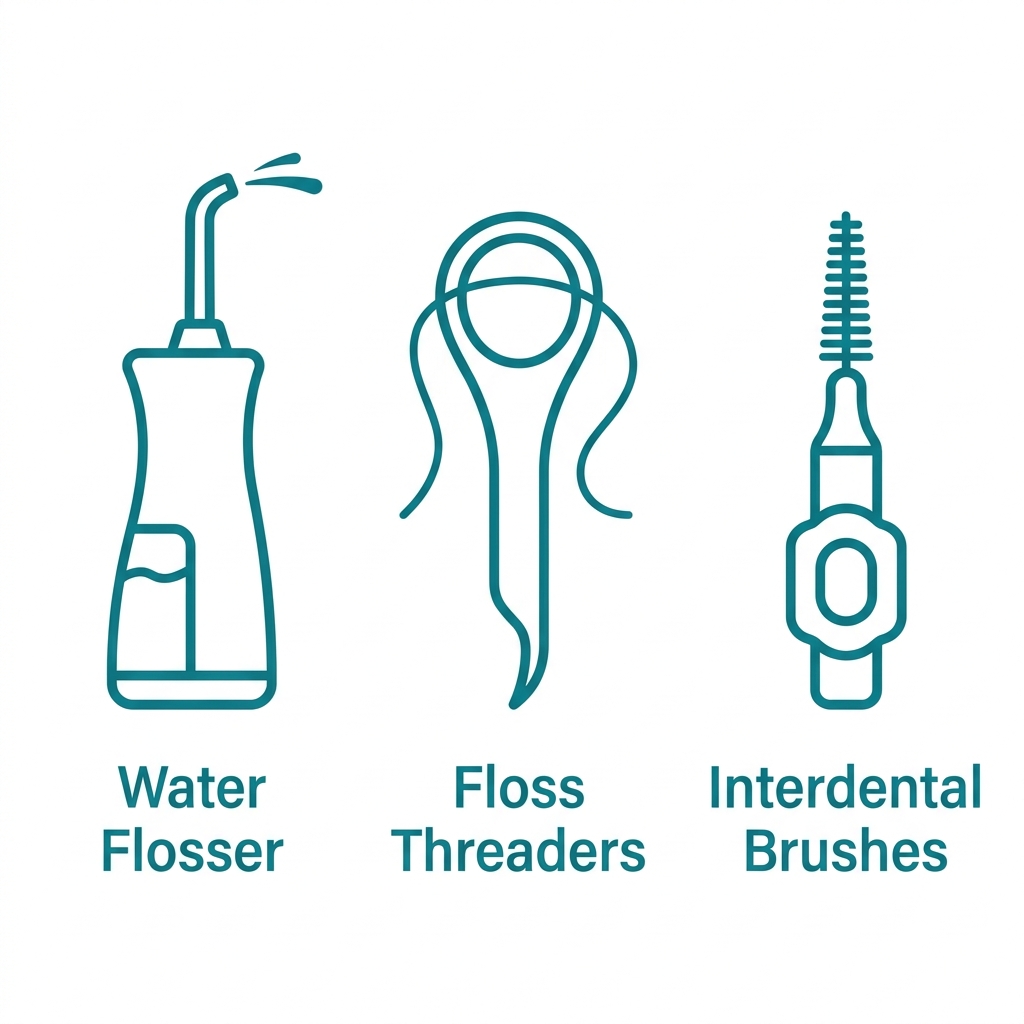
We recommend having these tools on hand:
- A water flosser for flushing debris from under the bridge
- Floss threaders to guide floss beneath the restoration
- Interdental brushes for cleaning between teeth and around the bridge
While you’re at the store looking over your options, make sure they carry the ADA Seal of Acceptance on their packaging, because it confirms the product has been evaluated for safety and plaque removal.
With all that taken care of, you can confidently go back and brush away on those teeth as well as the surfaces of your bridges.
Step 2: Brush Your Teeth and Bridge Surfaces Thoroughly
Once you have everything you need, apply a pea-sized amount of fluoride toothpaste to the bristles of a soft-bristled toothbrush. With the brush held at a 45-degree angle to your gumline, use gentle, circular motions to clean all natural teeth, spending at least two minutes covering outer, inner, and chewing surfaces.
With respect to cleaning up in proximity for the dental bridge you will need to clean all of the abutment teeth as well as the pontic. Use a vertical and circular stroke at the gum line where the bridge meets the soft tissue, scrubbing the bottom part of the pontic softly so particles are dislodged without damaging the bridge.
The American Dental Association recommends brushing twice daily, but this alone is not enough. Thorough brushing prepares teeth and bridge surfaces for effective interdental cleaning once a day. At The Grove Dentistry, we guide our Port Coquitlam patients through this technique to help keep their bridges and gums healthy. Brushing thoroughly creates a clean foundation for the flossing that follows.
Step 3: Floss Between the Bridge and Adjacent Teeth
The spaces underneath and behind a dental bridge allow food bits and germs to get in-between your natural teeth as well as the replacement pieces. Cleaning this area is particularly hard to complete using just a regular tooth brush alone, which makes flossing beneath the replacement sections crucial. As recommended by the ADA, everyone should be doing some form of interdental cleaning at least once each day, as this will help make sure there aren’t any remaining germs hiding inside those small cracks between our teeth.
To floss effectively:
- Insert a floss threader beneath the bridge and guide the floss between the bridge and the adjacent tooth.
- Slide the floss gently against the side of the restoring tooth and side of the natural tooth, using a back-and-forth motion. Avoid snapping the floss in and out, which can irritate the gums or damage the bridge.
- Use a fresh section of floss for each gap so you don’t reintroduce bacteria.
After you get all of the contact points in your teeth clean with your floss, next up for the water flosser would be to rinse under that bridge and along the gumline.
Step 4: Clean Underneath the Bridge with a Water Flosser
Once you’ve cleaned in between your bridge and its neighboring teeth, a water flosser will assist with scrubbing away any bacteria and debris located under the artificial tooth itself. According to the ADA, daily use of an interdental cleaner is vital to keep the space between these two points as hygienic as possible, especially if you have a permanent restoration such as this kind of dental appliance because it has the capacity to clean underneath there effectively.
- We recommend using a water flosser once a day—fill the reservoir with warm water and select a comfortable pressure setting.
- Aim the tip at the space under the bridge and move it slowly along each abutment tooth, pausing briefly at the gumline to dislodge any trapped particles.
- You can repeat this process until the water runs clear.
They are a good way for you to keep your dental bridge clean in-between professional visits from home. After you’ve used powered flossers, interdental brushes can clean any tight, hard-to-reach areas that floss and the water flosser may have missed.
Once your water flosser does its job in getting rid of particles under your bridge, you’ll want to go back to the tight side gaps around the pontic and abutments for further cleaning. The American Dental Association considers interdental cleaning essential and recommends using an interdental brush or similar tool at least once a day. Use an interdental brush or similar tool that fits in those tiny spaces. Gently guide it between the bridge and gumline, then move the brush forward until any debris falls out. You don’t have to push hard, just a little touch will do the trick. The ADA Seal means these products have been verified safe in clinical tests at removing plaque. So when you look for this seal on a product, you should feel more confident that the product will be effective. Your water flosser is cleaning off the big surfaces under teeth but it may miss some smaller spaces between them, which is where the narrow bristles come into play, reaching small spaces that the spray of water cannot hit. Once the brush has swept those last particles away, a therapeutic mouthwash can finish the job.
Step 6: Rinse with an Antibacterial or Fluoride Mouthwash
Another step you can take to make sure there are no germs left behind after brushing your teeth is using an antibacterial or fluoride mouthwash. The mouthwash can get into crevices and under the bridge of your dental bridge where plaque likes to hide. This can reduce swelling in the gums and also tooth decay on the supporting teeth. According to the ADA, flossing and using other forms of interdental cleaning tools are necessary steps when cleaning your teeth and gums if you want to keep them free from germs.
An antibacterial mouthwash can help get rid of stinky odors caused by bacteria and maintain your gums’ health. At the same time, a fluoride rinse will reinforce tooth enamel on adjacent teeth as well as shield bridges’ margins against demineralisation.
For most patients, we recommend an alcohol-free option to avoid dryness.
It is recommended you swish the mouthwash for 30 seconds after your evening brushing or before bed, making sure the liquid reaches all sides of the bridge. Then spit it out and don’t rinse straightaway with water. The components should continue to perform their work during night time if left undisturbed.
Step 7: Perform a Daily Inspection and Note Any Changes
A fast daily examination of your dental bridge may help you spot small changes prior to them developing into larger issues. Take some time to have a look at its surface areas following rinse off. The American Dental Association suggests you brush regularly around your bridges, which needs an extra little bit of care. Inspect if there’s a break in the ceramic, chip in the metal, discoloration, or any sort of wear and tear on either surface area. Gently bite down or carefully apply pressure to look out for loose fittings. This should be taken into account due to the fact that it could change. In addition, keep track of whether food gets trapped underneath the bridge or if there’s gum soreness, since these symptoms are worth considering too. Catching it early is better than late. Incorporating this easy inspection part of your day-to-day oral health regimen will put you back in charge. If anything sounds strange though, do not hesitate to call on our dentists from The Grove Dentistry in Port Coquitlam for a second opinion.
Even if you have followed your daily routine faithfully at home, bits of food might become wedged beneath the false tooth on a pontic or may get lodged between your remaining teeth near either end of the dental work. This happens all too often in our office here, but we wanted patients to know that such problems are normal occurrences and they are easily remedied through effective treatment methods.
Common challenges and practical solutions:
- Food packing under the bridge. Small particles, particularly fibrous or sticky foods, can lodge beneath the pontic. A water flosser set to a comfortable pressure can dislodge debris gently, while an interdental brush or floss threader designed for fixed restorations slips under the false tooth to clear the space.
- Difficulty threading floss under the pontic. Standard floss cannot pass between the bridge and the gumline. Floss threaders or superfloss with a stiffened tip make it easier to guide the strand under the pontic, protecting the surrounding tissue from injury during cleaning.
- Plaque accumulation on abutment teeth. The teeth anchoring the bridge are especially vulnerable. Daily interdental cleaning reaches these hidden surfaces; products carrying the American Dental Association (ADA) Seal of Acceptance have been scientifically evaluated for safety and effectiveness against plaque.
Mild gum tenderness or inflammation at the bridge might happen as well. To alleviate this situation, rinse your mouth with warm salt water about one to two times per day. If soreness lasts more than a couple days, make an appointment with your dentist to check if there is any stuck debris or if your appliance doesn’t fit correctly.
The ADA recommends brushing twice a day and cleaning between teeth once daily, habits that form the foundation of oral health, even when a fixed bridge is present. By tackling these cleaning challenges, you set your bridge up for long life.
Keeping Your Dental Bridge in Top Shape for Years to Come
Resolving any immediate cleaning challenges you’ve encountered sets the stage for a healthy, lasting routine. Dental cleaning procedures and maintenance should start from the process of dental bridge cleaning and maintenance: interdental cleaning has to be carried out regularly. The American Dental Association recommends using tools like water flossers at least once daily to clear away plaque and debris that a toothbrush can’t reach. Water flossers or interdental brushes can make this daily care easier and more effective. We encourage you to pair this daily habit with regular professional check-ups and cleanings at your dentist—individual results vary, and ongoing care helps monitor your bridge’s condition over time. With the above simple tips, the patient can feel confident in the comfort and durability of his bridge for years to come. But patients still have to seek advice from doctors as the outcome is not guaranteed.
Schedule Your Bridge Care Today
You now have a complete step-by-step routine for dental bridge cleaning and maintenance, based on ADA guidelines. Daily interdental cleaning with water flossers and brushes is key to preventing plaque buildup and keeping your bridge healthy. While home care is essential, professional check-ups at our clinic ensure your restoration stays secure for years. The clinic offers free initial assessments to evaluate your bridge’s condition and provide personalized care advice. Located in Port Coquitlam, British Columbia, the team is ready to help with friendly, accommodating service. Call (604) 941-2211 or visit our restorative services page to book your appointment.
Schedule Your Bridge Care Today


