

Table of Contents
- Understanding Mini Dental Implants vs Standard Implants
- Benefits of Mini Dental Implants vs Standard Implants
- How Mini and Standard Dental Implants Work
- Best Practices for Mini Implant vs Standard Implant Success
- Choosing the Right Implant for Your Smile
Understanding Mini Dental Implants vs Standard Implants
If you are exploring tooth replacement options, you are likely comparing mini dental implants vs standard implants. Understanding these two approaches can feel overwhelming, but a clear, fact-based comparison makes the decision easier. Our team at The Grove Dentistry offers consultations for both types in British Columbia, helping patients in the Tri-Cities area find the solution that fits their unique oral health situation.
What Are Mini Dental Implants?
Mini dental implants are a narrow-diameter tooth replacement option with a width typically less than 3 mm. Unlike traditional fixtures, these smaller posts are designed primarily for specific cases where bone width is limited. According to The Grove Dentistry’s internal expertise, mini implants are frequently recommended to stabilize lower dentures, offering a secure anchor that prevents the slipping and discomfort common with removable appliances. They are also an effective solution for replacing smaller teeth in tight spaces where a wider post might risk damage to adjacent roots.
The material used is typically a titanium alloy, which provides sufficient strength for the lighter loads expected in these targeted applications. Because of their reduced diameter, the placement is markedly less invasive. This characteristic makes the option appealing for patients who may be considering orthodontics in Tri Cities, British Columbia or other restorative work but are concerned about surgical complexity.
What Are Standard Dental Implants?
Standard dental implants are wider-diameter fixtures, generally ranging from 3.5 mm to 6 mm in width. This larger foundation delivers a significantly higher load-bearing capacity, making them the versatile workhorse of modern restorative dentistry. The Grove Dentistry often recommends these implants for single-tooth replacement and for anchoring larger prosthetics like bridges and full-arch restorations. When a patient needs to replace a molar that endures heavy chewing force, a wider standard implant made of commercially pure titanium is the typical choice for long-term reliability.
The placement procedure does require adequate bone volume to achieve primary stability. However, the result is a restoration that functions much like a natural tooth root, stimulating the jawbone to prevent the atrophy that follows tooth loss. Patients exploring comprehensive smile makeovers often find that standard implants form the backbone of their treatment plan, working seamlessly alongside other services like orthodontics in Tri Cities, British Columbia to achieve a fully functional and aesthetic result.
Side-by-Side Comparison: Mini vs Standard Implants
When evaluating mini dental implants compared to standard implants, the differences become clear when broken down into specific clinical dimensions. The decision hinges on your anatomy, functional needs, and long-term priorities.
- Size: Mini implants are less than 3 mm in diameter, while standard models range from 3.5 to 6 mm.
- Material: Mini implants typically use a titanium alloy, and standard posts are often made of commercially pure titanium.
- Invasiveness: Placing a mini implant involves a less invasive, often flapless procedure needing no sutures, where a standard implant requires a more traditional surgical approach.
- Healing Time: The reduced trauma from mini implants often allows for faster initial healing, while standard fixtures rely on a longer osseointegration period over several months.
- Typical Lifespan: With proper care, mini implants can last for many years, but standard dental implants are renowned for a longer potential lifespan due to their structural robustness.
- Bone Requirement: Mini implants are an excellent solution in areas with significant bone loss, whereas standard implants depend on a broader and denser bone foundation.
- Cost in BC: Generally, the overall treatment for a mini dental implant is more affordable in British Columbia, reflecting the smaller fixture and less complex placement process.
The Canadian Dental Association provides general professional guidelines on implant dentistry, underscoring that the longevity of any system is tied directly to a patient’s ongoing commitment to oral hygiene and regular professional check-ups. Both options are made from biocompatible materials designed to integrate with your body.
Ultimately, the pathway to a restored smile is not about which system is categorically superior. It is about matching the right tool to your specific anatomy and goals. During a consultation at our Port Coquitlam clinic, we evaluate your oral health to discuss whether a narrow-diameter solution or a wider, more robust standard post is the more appropriate choice for your needs.
Results may vary. Consult a healthcare professional for diagnosis or treatment advice.
Benefits of Mini Dental Implants vs Standard Implants
When comparing mini dental implants vs standard, several key differences emerge that can guide your tooth replacement decision. Both implant types can restore function and appearance, but they differ in invasiveness, healing time, cost, and longevity. Understanding these differences helps you and our team in Port Coquitlam determine the best path for your smile, whether you need to replace a single tooth or stabilize a denture.
We have prepared the following comparison to give you a clear, side-by-side look at these two implant options based on typical BC fee guides, clinic estimates, and clinical data.
| Factor | Mini Dental Implants | Standard Dental Implants |
|---|---|---|
| Invasiveness of Procedure | Minimally invasive, often no flap surgery | Requires flap surgery, possible bone grafting |
| Typical Healing Time | Few weeks to a few months | Three to nine months |
| Average Lifespan | 5–10 years, with proper care | 15–25 years or more |
| Approximate Cost (BC, per implant) | $500–1,500 | $1,500–4,000+ |
| Suitable for Full Denture Stabilization? | Yes, especially lower dentures | Yes, with greater stability for full arch |
| Bone Density Requirement | Adequate for narrow bone; less grafting | Requires sufficient bone; may need grafting |
The table shows that mini implants shine in less invasive placement and faster healing, while standard implants offer greater longevity and chewing strength. Understanding these tradeoffs helps frame which implant option fits your specific clinical needs, from budget to bone health.
Advantages of Mini Dental Implants
Mini dental implants provide several unique benefits that make them an attractive option for many of our patients. Because they are smaller in diameter, placing them is minimally invasive and often requires no flap surgery or stitches. Recovery is typically measured in weeks rather than months, letting you return to normal eating and routines sooner. Mini implants also come with a lower upfront cost, with BC estimates generally ranging from $500 to $1,500 per implant. Perhaps most importantly, mini implants can fit narrow jaw ridges, often eliminating the need for bone grafting. This can be a significant advantage for patients who have experienced bone loss or who are seeking a simpler path toward implant-supported restorations, including those exploring orthodontics in Tri Cities, British Columbia who may need adjunctive implant support.
Advantages of Standard Dental Implants
Standard dental implants remain the gold standard for long-term tooth replacement. Their larger diameter delivers superior chewing strength, allowing you to enjoy a full and varied diet without restriction. According to data from the Canadian Dental Association and clinical studies, standard implants typically last 15 to 25 years or more, providing exceptional longevity compared to the 5- to 10-year average for mini implants. Standard implants also offer better aesthetic outcomes, particularly for anterior teeth where a natural emergence profile is paramount. Unlike mini implants, they can reliably support bridges and full-arch restorations, giving our team more prosthetic flexibility. The longer healing time of three to nine months requires careful post-operative care, but this healing phase ensures strong osseointegration and a durable result for patients considering comprehensive care, including orthodontics in Tri Cities, British Columbia.
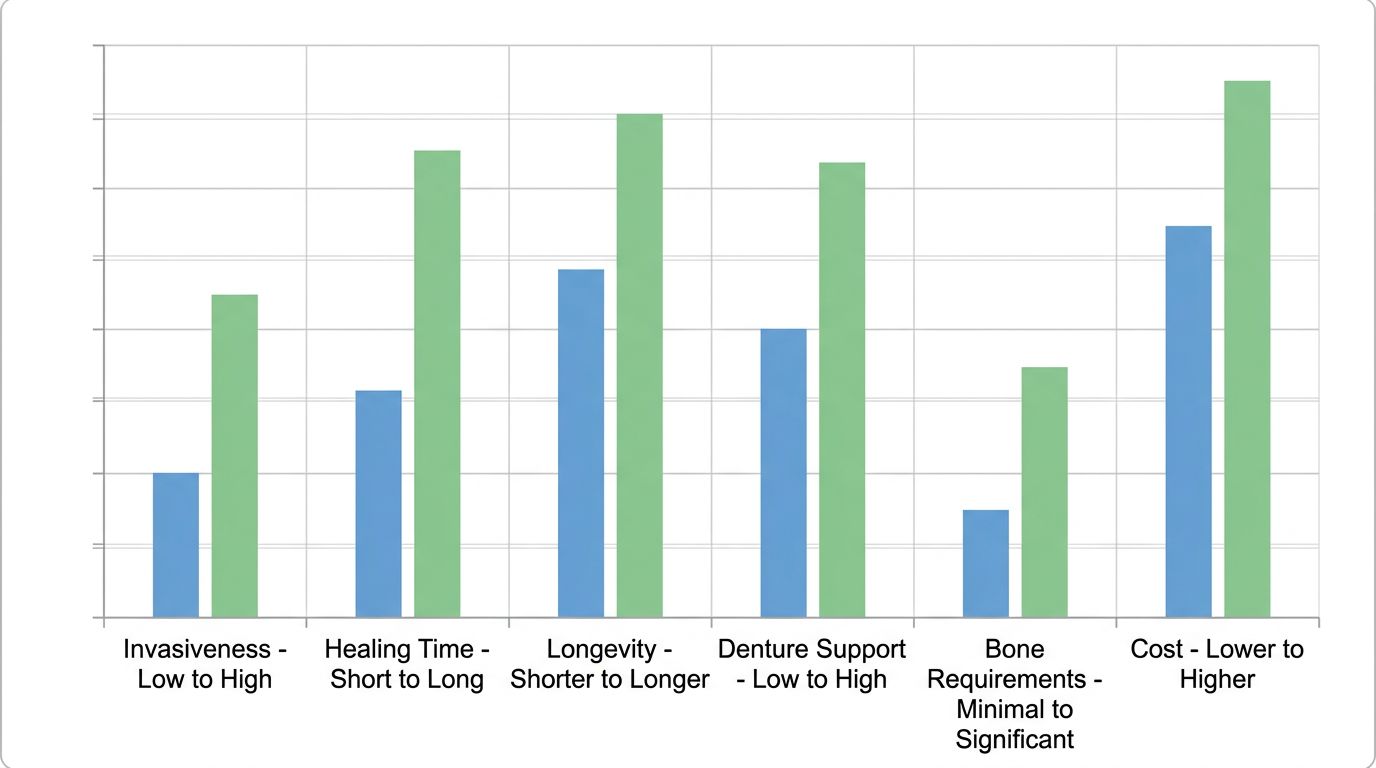
Comparison of mini and standard dental implants across six clinical factors
Implant-Supported Dentures: Mini vs Standard
Both implant types can dramatically improve denture stability, but they do so in different ways. Mini implants are a popular choice for lower denture retention, offering a cost-effective solution that secures a removable prosthesis with a less invasive procedure. Standard implants, by contrast, provide a more robust platform for full-arch hybrid dentures, delivering enhanced stability that many patients find more closely mimics the feel of natural teeth. The choice often depends on your bone volume, budget, and how much stability you desire. In every case, the decision rests on individual clinical factors such as bone density, the number of missing teeth, and your personal goals for longevity and function.
Results may vary. Consult a healthcare professional for diagnosis or treatment advice. Treatment outcomes are not guaranteed and depend on individual circumstances.
How Mini and Standard Dental Implants Work
Now that you understand the key differences, let’s walk through each step of the procedure to see exactly how mini and standard dental implants work. Our team at The Grove Dentistry promises a friendly and accommodating experience from your very first visit through your final restoration, using modern digital technology to ensure precise, predictable outcomes.
Step 1: Consultation and Imaging
Welcome to Grove Dentistry. Your journey begins with a complimentary initial assessment where we discuss your needs and perform advanced 3D imaging. A cone-beam computed tomography (CBCT) scan creates a highly detailed view of your jawbone density, nerve pathways, and sinus position, which is essential for planning both mini dental implants vs standard implant placement. During this appointment we discuss which option fits your situation, create a personalized treatment plan, and can also review other treatments we offer such as orthodontics in Tri Cities, British Columbia. We can also provide additional resources on orthodontics in Tri Cities, British Columbia if you’d like to explore alignment options. With digital technology guiding every decision, we can determine whether a flapless mini procedure or a staged standard approach will deliver the best long-term result for your smile.
Step 2: Implant Placement Surgery
The surgical experience differs significantly between these two procedures. For mini dental implants our team performs a single-stage, flapless procedure under local anesthetic. A small pilot hole is created through the gum tissue and into the bone, the narrow implant is threaded into place, and the procedure is completed with no sutures required. This minimally invasive technique means less discomfort and faster healing.
Standard implant placement follows a more involved surgical protocol when bone volume permits or grafting is needed. After administering local anesthetic, the surgeon creates a small flap in the gum to expose the jawbone. A precisely measured osteotomy is prepared, the wider implant fixture is placed, and the tissue is sutured closed. If bone grafting is required to build adequate support, the implant may be completely buried under the gum for several months before exposure in a second minor surgery. Based on internal clinic protocols, standard cases typically involve a healing abutment or temporary crown, whereas mini implant cases can often support immediate loading when bite forces and bone quality allow, though final restoration timing varies individually.
Step 3: Healing and Final Restoration
Osseointegration is the biological process where living bone fuses directly to the implant surface, creating a stable foundation. For the comparison of mini and standard implant procedures it is important to understand that mini dental implants typically achieve sufficient integration within as little as four to eight weeks. In select cases our team can attach the final crown, bridge, or denture during the same appointment as placement. Standard implants require a longer healing window of three to six months to achieve full osseointegration before the restorative phase. Only after we confirm through clinical examination and imaging that the implant has integrated successfully do we proceed with attaching the final restoration.
Step 4: Recovery and Follow-Up
Post-operative care plays a vital role in treatment success. During the first week, stick to a soft food diet and gently brush around the implant site while avoiding straws and spitting. Use any prescribed mouth rinse as directed to keep the surgical area clean. Our team schedules follow-up visits at one week, one month, and then at regular intervals to monitor implant stability and gum health. Attending every follow-up appointment helps us catch concerns early and keep your healing on track.
Results may vary; consult a healthcare professional for diagnosis or treatment advice. Treatment outcomes are not guaranteed and depend on individual circumstances. After a successful recovery, you’ll be ready to enjoy your new smile. Next, we’ll explore who is a good candidate for each type of implant.
Best Practices for Mini Implant vs Standard Implant Success
Achieving long-term success with your new smile starts with a diligent aftercare routine, regardless of whether you chose mini dental implants vs standard. We believe that patient education is just as important as the procedure itself, and our team is committed to guiding you through every step of your recovery to ensure your implants last for years to come.
Oral Hygiene for Implant Patients
Maintaining a spotless implant surface is your best defense against peri-implantitis, a destructive inflammatory condition that affects the tissues around an implant. This condition can compromise the foundation of both conventional and mini implants, potentially leading to implant loss if not managed early. We recommend a comprehensive daily cleaning regimen that includes gentle brushing with a soft-bristled brush and the use of specific interdental tools.
Beyond basic flossing, incorporating a water flosser or specialized interdental brushes into your routine is an excellent way to clean those hard-to-reach nooks around your restoration. According to the Canadian Dental Association, standard hygiene protocols and professional cleanings form the cornerstone of preventing disease around dental work. Our hygiene team here at The Grove Dentistry will demonstrate these techniques to help you build an effective daily habit, ensuring that caring for mini versus standard implant success becomes a seamless part of your routine.
Diet and Lifestyle Tips
What you eat—and what you don’t—plays a critical role in the healing phase known as osseointegration, where your implant fuses with the surrounding jawbone. During the initial weeks of recovery, we strongly advise sticking to a softer diet. You should avoid hard, crunchy, or sticky foods like nuts, crusty bread, and caramel, which can create damaging micro-movements and interrupt this natural bonding process.
Your lifestyle choices are equally powerful. Habits like smoking and excessive alcohol consumption restrict blood flow and significantly increase the risk of complications by impairing your body’s natural healing capacity. For patients committed to maximizing their results, we recommend quitting smoking entirely and limiting alcohol to give both your oral and overall health the best possible foundation. These protective measures are equally vital whether you selected a standard implant or received a less invasive mini version.
Regular Dental Visits and Monitoring
Your relationship with our clinic is the safety net that protects your investment. Staying consistent with your scheduled follow-up appointments allows us to professionally monitor the health of your implants and spot any minor issues before they become major concerns. A loose screw or early tissue inflammation is far easier to treat when caught early during a periodic exam.
To support this, The Grove Dentistry has developed an efficient recall system designed to keep your preventive care on track without the hassle of remembering to call. By leveraging this system, alongside our full scope of service that includes orthodontics in Tri Cities, British Columbia, we can keep a watchful eye on your entire smile. This integrated approach reflects our promise that you’ll always experience a friendly and accommodating experience in our newly built clinic.
Protecting Your Implant Investment
A proactive approach to protection ensures that a sudden accident doesn’t undo your beautiful results. For patients who grind or clench their teeth—a condition known as bruxism—a custom-fitted nightguard is essential. These unconscious forces far exceed normal chewing pressure and can fracture porcelain or damage the implant structure over time, whether for a mini or a standard implant.
Likewise, if you lead an active lifestyle or participate in contact sports like hockey, which is beloved here in the Tri-Cities, you should always wear a properly fitted sports mouthguard. A good guard absorbs harmful impacts and disperses energy, shielding your natural teeth and your implant restorations. As part of our comprehensive care, including services ranging from prevention to orthodontics in Tri Cities, British Columbia, our team can create the protective appliances you need. By following these best practices, you can smile confidently, knowing you’ve taken every step to maximize your chances of long-term success. We look forward to seeing you at your next visit!
Choosing the Right Implant for Your Smile
Once you’ve decided that dental implants are the path to restoring your smile, the next step is understanding your options. When comparing mini dental implants vs standard, the choice often comes down to your jawbone’s health and how many teeth need replacing. Mini implants are narrow posts—typically under 3 mm—that work well for stabilizing lower dentures or fitting into thinner bone, while standard implants range from 3.5–5 mm and serve as robust anchors for single crowns, bridges, or even full-arch restorations.
Several factors influence which solution suits you best. Bone density is the starting point: if your jaw has resorbed over time, mini dental implants in Port Coquitlam can often be placed without bone grafting, whereas standard implants usually require sufficient volume. The procedure itself also differs—mini implants may involve a less invasive process with shorter healing and, in some cases, same-day loading, while standard implants typically need a healing period of three to six months before your final crown is secured. Durability is another consideration; standard implants boast a proven track record exceeding 95% success after a decade, while mini implants perform best when biting forces are lighter.
Your smile deserves a tailored solution, and the best way to choose is with professional guidance. For comprehensive care including orthodontics in Tri Cities, British Columbia, The Grove Dentistry offers personalized treatment plans that start with a free assessment. Let us help you choose the implant that fits your smile — schedule your free assessment today! 🦷
Resources
- Get Permanent Dental Implants in Port Coquitlam
- Find Orthodontic Options Including Invisalign in Tri Cities
- Compare Orthodontic Costs in Tri Cities BC
- Learn About the Canadian Dental Care Plan Coverage
- Compare Dental Implants vs Dentures for Replacement
- Discover Dental Implant Costs and Financing Options
- Explore CDCP Services Covered at Your Clinic
- Explore CDA Resources for Dental Professionals


