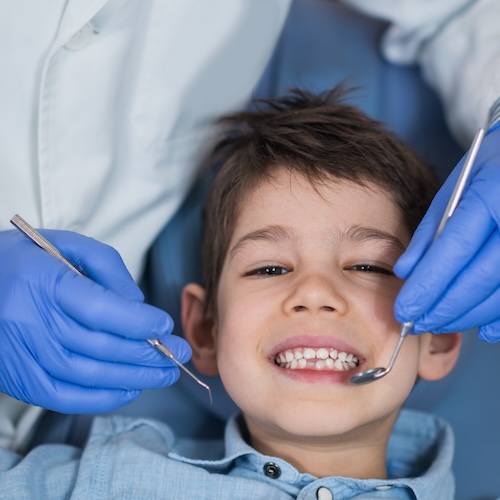
The process of applying dental sealants at a family dentist is a quick, painless, and non-invasive procedure that typically takes 15 to 30 minutes per tooth. No drilling or anesthesia is required, making it a comfortable experience for children.
The clinical steps include:
Cleaning: The dentist or hygienist thoroughly cleans the molars to remove plaque and food particles using mild polishing tools.
Isolation and Etching: The tooth is kept dry using a cotton roll or rubber dam. A special etching solution is applied to the chewing surface for approximately 15 seconds to create a slightly rough texture, which helps the sealant bond securely.
Rinsing and Drying: The etching solution is rinsed off, and the tooth is dried completely.
Application: The liquid resin or glass ionomer sealant material is brushed onto the tooth, where it flows into the deep pits and microscopic grooves.
Curing: A special curing light is shone over the tooth for 20 to 30 seconds to harden the material into a durable protective barrier.
After the procedure, patients can immediately return to their normal activities, though dentists typically recommend avoiding sticky or chewy foods for the first 24 hours to allow the coating to bond fully.
Related FAQs
-
Why do my Dentures Feel Loose Even if They Fit Well Before?
Read More »: Why do my Dentures Feel Loose Even if They Fit Well Before?It is quite common for dentures to feel loose over time, even if they initially fit perfectly. This change typically occurs because your mouth and jaw naturally evolve. Several factors contribute to this shifting fit: When these changes occur, you…
-
Can a Dentist Fix Loose Dentures without Making a Whole New Set?
Read More »: Can a Dentist Fix Loose Dentures without Making a Whole New Set?Yes, we can often fix loose dentures without the need for a completely new set. Our team uses several professional methods to restore the fit and comfort of your existing appliance: Because every smile is different, results may vary and…
-
Can Dental Bridges Increase the Risk of Tooth Decay or Gum Disease?
Read More »: Can Dental Bridges Increase the Risk of Tooth Decay or Gum Disease?Yes, dental bridges can increase the risk of both tooth decay and gum disease. Because of the way a bridge is constructed, it creates specific areas that act as magnets for germs and plaque, which can lead to several oral…
-
Does Getting a Dental Bridge Require Filing down Healthy Adjacent Teeth?
Read More »: Does Getting a Dental Bridge Require Filing down Healthy Adjacent Teeth?Yes, getting a dental bridge does require filing down the healthy adjacent teeth. This is often considered a significant downside of the procedure because the enamel removal is permanent and irreversible. To install a bridge, we must reshape the two…
-
What are Sports Mouth Guards Made Of?
Read More »: What are Sports Mouth Guards Made Of?At our Port Coquitlam clinic, we use high-quality materials to create custom-made mouth guards that offer superior comfort and safety for young athletes. Unlike generic over-the-counter options, our custom guards are fabricated from precise digital impressions or traditional molds of…